Ball for Hockey: Types, Materials and How to Choose the Right One
What a ball for hockey is
A ball for hockey is a small, hard ball made for use on a hockey pitch. It has no moving parts. Yet the ball you use still matters. It affects how the ball rolls, how it bounces, and how comfortable it feels when you strike it.
When people talk about a ball for hockey, they usually mean a field hockey ball. It is not an ice hockey puck. Players play field hockey on grass, artificial turf, or a similar flat surface. The ball rolls smoothly across that surface. It is firm, round, and easy to see against the pitch. That firmness is deliberate: a soft ball would slow down quickly and be harder to pass accurately over distance.
Beginners sometimes assume that any ball for hockey will do, and for a first casual session that may be true. Once you play regularly, however, the differences become easier to notice. Some balls roll truer on a smooth artificial surface. Others suit a grass pitch better. Some suit training rather than matches. Knowing the main types helps you choose a ball that suits your level and your pitch.
Types of ball for hockey
There is no single ball for hockey that suits every player and every pitch. The main differences come from the surface of the ball and its intended use.
Smooth balls
A smooth ball for hockey has an even outer surface with no dimples or texture. On a flat, well-kept artificial pitch, it can roll very cleanly, which makes passing and receiving feel predictable. Many players like smooth balls for matches on good surfaces, because the ball travels in a straight line.
Smooth balls can be less forgiving on a wet or uneven surface. A little extra grip can help there. They can also show wear more clearly. Even so, a smooth ball is often a sensible starting point. This applies if you mostly play on a modern artificial pitch.
Dimpled balls
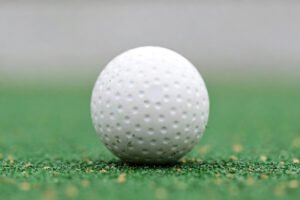
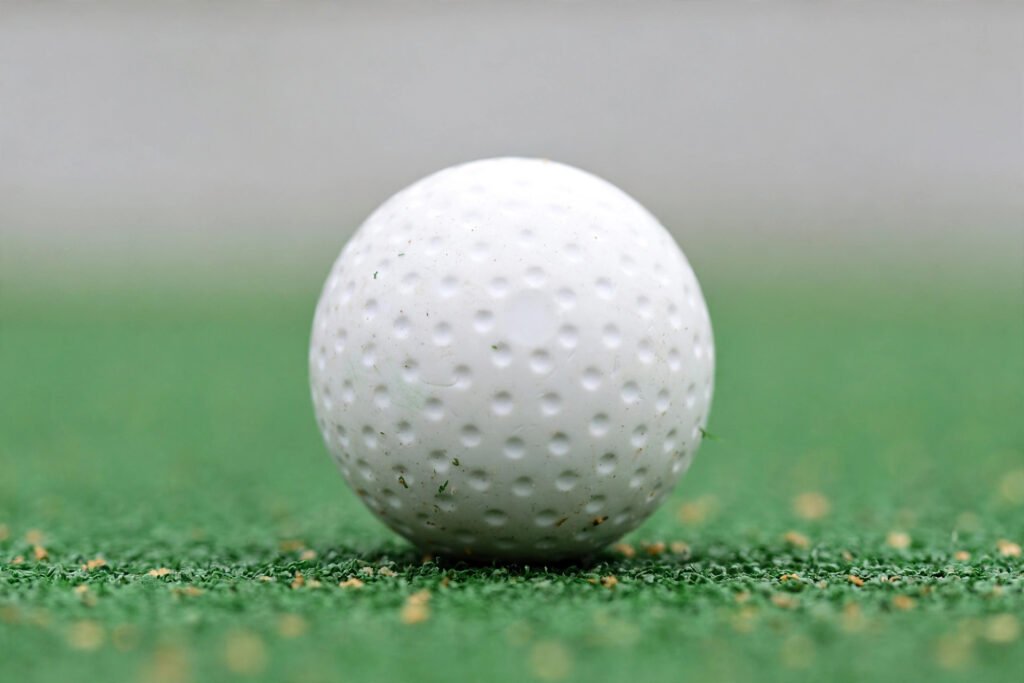
A dimpled ball for hockey has small, shallow dimples across its surface. It looks a little like the surface of a golf ball. The dimples help the ball grip the pitch slightly and reduce skidding, especially on wet surfaces. On a damp or uneven pitch, a dimpled ball can feel more controlled than a smooth one.
Dimpled balls are also a common choice for training. They tend to behave consistently in a wide range of conditions. If you play in different weather or on different pitches, a dimpled ball can be a practical, forgiving option.
Training balls and match balls
Players usually choose a training ball for hockey for durability. Use it for drills and passing practice. It needs to survive repeated strikes and heavy use. It also needs to cope with different weather.
By contrast, keep a match ball in better condition. Use it only for games. Choose it for a true roll and a consistent feel. Some clubs keep a separate set of match balls. Then the ball used in a game stays in good condition. That habit is worth copying, even at a casual level.
Materials and construction in plain terms
Makers make most modern balls for hockey from hard plastic. Each ball has a firm outer shell and a solid inside. That construction keeps the ball in shape during play. It gives the ball a firm, predictable feel. The exact material can vary between makers, and you do not need to learn every technical term to choose well. What matters is how the ball feels when you hit it. Also check how it rolls on your usual pitch. And check how long it lasts.
Colour is also practical. Most hockey balls are white or a bright colour, so they stand out against the pitch. On a green artificial surface, a white ball is easy to follow. On a wet or muddy pitch, a brighter colour can be easier to see. Visibility matters for safety as well as play. Players need to see the ball clearly before they move towards it.
How to choose a ball for hockey
Choosing a ball for hockey is simpler than choosing a stick or a pair of shoes. Still, a few checks will help. Start with your pitch. If you mostly play on a smooth artificial surface, a smooth ball may suit you well. If you play on grass or on a wet pitch, a dimpled ball may give you more control. The same applies on a surface that varies from week to week.
Next, think about your level. Beginners often benefit from a forgiving, predictable ball, rather than one chosen for speed alone. More experienced players may prefer a truer roll for faster passing. Then think about how often you play. If you play once a week casually, one or two good balls may be enough. If you train regularly or coach a group, a larger set of training balls will help more. It will be more useful than a single match ball.
Finally, check the ball before you use it. Roll it on a flat surface and watch whether it runs straight. Also look for cracks, flat spots, or deep scuffs. A ball that wobbles will frustrate passing practice, however good the rest of your equipment may be.
A ball for hockey in training and in matches
In training, a ball for hockey is a tool for repetition. Drills for passing, receiving, and shooting all depend on a ball that behaves the same way each time. If the ball rolls differently on every touch, it is hard to tell the cause. The mistake may come from your technique. Or it may come from the ball itself. That is why coaches often prefer a consistent set of training balls.
In matches, the same consistency matters, but the stakes feel higher. A ball that rolls true helps both teams play as intended. It also reduces the chance of an unexpected bounce. Such a bounce could change a passage of play. Many players check the match ball before a game, just as they check their stick and shoes. Keeping training balls and match balls apart also helps when you can. Match balls used for every drill wear more quickly. They may then lose the clean roll that made them suitable for games.
Care and storage in general terms
A ball for hockey needs very little care, but a few simple habits will help it last longer. After play, wipe off mud and moisture, especially after a wet pitch, since dried mud can hide cracks or damage. Store balls in a cool, dry place, away from direct heat and heavy objects. A kit bag is fine for transport. Balls left under boots and heavy kit may pick up marks. So use a separate pocket or small ball bag. Check your balls from time to time. Replace any cracked ball, any ball with a flat spot, or any ball that no longer rolls straight. Keeping a spare in your kit bag avoids being caught out.
Common mistakes to avoid
One common mistake is to choose a ball for hockey on colour alone. Colour helps visibility, but it does not tell you how the ball will roll on your pitch. Another mistake is to use the same worn ball for everything. A ball with deep scuffs or a wobble may hold back your passing practice. Replacing it is usually simpler than working around its faults. A third mistake is to ignore the pitch. A ball chosen for a smooth artificial surface may not suit grass. The reverse also applies. Matching the ball to the pitch makes a noticeable difference.
Frequently Asked Questions
What is a ball for hockey made of?
Makers usually make a ball for hockey from hard plastic. It has a firm outer shell and a solid inside. That keeps its shape during play and gives it a firm, predictable feel on grass or artificial turf.
Are hockey balls and a ball for hockey the same thing?
Yes. In everyday use, a ball for hockey and hockey balls refer to the same item: a field hockey ball. This guide uses both phrases for the same ball.
Should beginners use a smooth or a dimpled ball for hockey?
Either can work. A dimpled ball is often a forgiving choice for beginners. This is especially true on wet or uneven pitches. It grips slightly and skids less. A smooth ball can suit a flat artificial pitch very well. Try both in training if you are unsure.
How many balls should I keep in my kit bag?
For casual play, two or three balls are usually enough, including one spare. For regular training or coaching, a larger set is more useful. Then drills do not stop every time a ball goes out of play.
When should I replace a ball for hockey?
Replace a ball for hockey if it is cracked or has a flat spot. Also replace it if it no longer rolls straight. Deep scuffs that affect its roll are another reason to replace it. A quick roll test on a flat surface will usually show whether a ball is still in good shape.
Where can I learn more about hockey equipment and pitches?
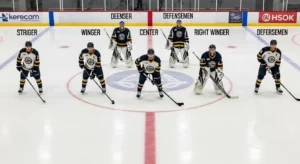
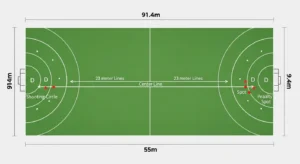
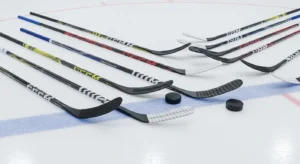
The Sticks for Hockey Guide 2026 is a useful companion to this guide. Sticks and balls work together in every session. The Hockey Pitch Guide explains the surfaces for a ball for hockey. That helps explain why smooth and dimpled balls behave differently. Beginners may also find the Positioning Hockey Guide for Beginners helpful. Knowing where to stand makes it easier to receive and pass the ball cleanly.