Jersey for Hockey: Types, Fit and How to Choose One
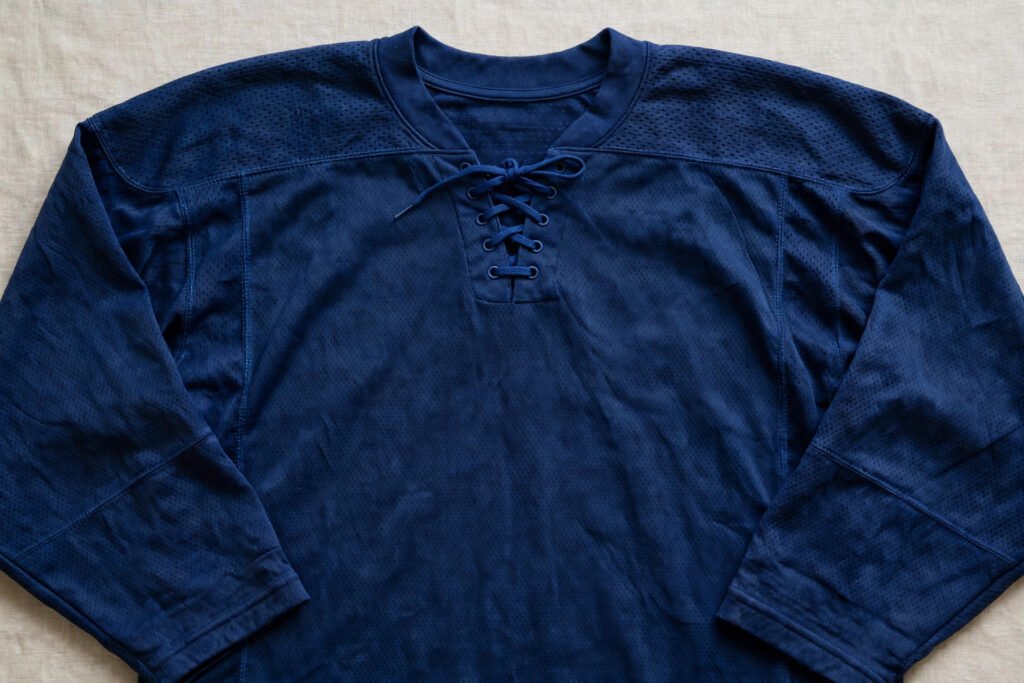
A jersey for hockey is the shirt a player wears on the pitch or on the ice. It does far more than show a team colour. It must move with the body, cope with sweat and fast turns, and stay easy to read for team-mates, officials and spectators. The right jersey can make a long match feel easier. The wrong one can distract you at the wrong moment.
This guide explains hockey jerseys in plain terms. It covers field and ice hockey jerseys, the main types, fit and materials, team and casual wear, and care. For match timings, see How Long Does the Hockey Game Last? Complete Guide.
What a jersey for hockey is for
At its simplest, a jersey for hockey identifies a player and a team. Colours and numbers help everyone follow play fast, especially when the game moves fast. Team jerseys stay simple and bold. They also contrast clearly with shorts, socks or ice-hockey trousers.
Comfort matters just as much. Hockey involves sprinting, turning and, on ice, long shifts at high effort. A tight jersey can restrict shoulders and arms. A loose one can catch, flap or ride up. The best jersey feels forgotten, because it moves with you and needs no constant adjusting.
A jersey also forms part of a kit. It must work with protective kit, from shin pads and gloves in field hockey to shoulder pads and elbow pads in ice hockey. A jersey that sits badly over pads will bunch or pull, however good the fabric feels alone.
Field hockey jerseys and ice hockey jerseys
Field hockey and ice hockey jerseys share a purpose, but they differ as garments. Choosing the wrong type can cause problems.
Field hockey jerseys feel lighter and closer to a normal sports shirt. Players often wear them outdoors in warmer conditions, over a base layer only, with shin pads below. Short sleeves and a fairly straight cut help ventilation, because players run for long periods without long breaks. For field hockey in England, England Hockey is the national governing body.
Ice hockey jerseys, often called sweaters, feel looser and longer. They must fit over shoulder pads, elbow pads and a chest protector, so the body and sleeves carry extra room. Heavier fabric and long sleeves with cuffs that sit over gloves complete the cut. A field jersey over ice pads would feel tight and short. An ice jersey for field hockey would feel heavy and baggy.
If you play both forms, keep a separate jersey for each. The difference goes beyond looks. It affects fit over kit, temperature and effort levels.
Types of hockey jersey
Team jerseys
Clubs and school sides order team jerseys as a set, in a shared colour, often with a number and a badge. Every player then looks the same on the pitch or rink. Style matters less here than fit and durability, because a team jersey faces frequent washing and all conditions.
Training jerseys
Training jerseys stay simpler and plainer. Players use them for practice, warm-ups or as a spare. They spare wear on a match jersey, and a plain training shirt also suits other sports. For a new player, a training jersey often makes a sensible first purchase.
Replica and supporter jerseys
Supporter jerseys suit fans rather than players. They look like a team jersey but use an everyday cut, not a playing cut over pads. They feel comfortable for watching a match, but they may fit badly over protective kit and cope less well with heavy sweating. If you plan to play, choose a jersey made for playing, not just supporting.
Goalkeeper jerseys
Goalkeepers wear a different colour from outfield players, so they stand out clearly. In field hockey, a goalkeeper jersey also fits over extra padding, so it runs looser than an outfield shirt. In ice hockey, the cut fits over even larger chest and arm protection. Fit over pads matters more than a slim look in goal.
Materials in general terms
Most modern hockey jerseys use lightweight man-made fabrics, not heavy cotton. Man-made fabrics dry faster, weigh less when wet and hold shape better after washing. Cotton feels heavy once it absorbs sweat and takes much longer to dry.
Many jerseys include mesh panels, areas of open fabric under the arms or along the sides. These panels let air move through the shirt. They change the look little, but they can improve comfort in a warm hall or on a sunny pitch.
Fabric weight also matters. A very light jersey feels cool and free but can feel thin and less durable. A heavier jersey feels more solid and lasts longer but can feel warm in summer. No single weight suits everyone. Your choice depends on indoor or outdoor play, summer or winter, and protection underneath.
Fit: what to check before you choose
Fit matters most when you choose a jersey for hockey. Check it while you wear the rest of your kit. A jersey that fits over a T-shirt may feel tight over pads, so always try it in the kit you will play in.
Start with the shoulders. Shoulder seams should sit close to the natural shoulder line, without pulling when you raise your arms. Then check chest and waist. The jersey should let you breathe deeply and twist without tightness, but it should not hang so loose that it catches on sticks or other players.
Sleeve length also matters. In field hockey, short sleeves should end above the elbow and allow full arm movement. In ice hockey, long sleeves should reach the gloves without riding up when you reach forward. Body length should stay in place during play, not ride up each time you bend or stretch.
Between sizes, pads should guide you. In ice hockey, or in goal, choose the larger size, because comfort over pads matters more than a neat fit. In field hockey without heavy pads, the smaller size may feel tidier, if it does not restrict movement. For choosing the stick that goes with your kit, see our Sticks for Hockey Guide 2026.
Choosing a jersey for hockey for team or casual wear
For a team
For a team, consistency matters most. Every player should wear the same colour and a similar fit, so the side looks like a unit and officials can tell teams apart easily. Numbers, if used, need a clear contrasting colour and a position readable from a distance. For where each player stands, see our Positioning Hockey Guide for Beginners.
Durability also matters for team wear, because a team jersey faces washing after almost every match. Choose a fabric and print that can cope with regular washing, and follow the care label. Do not wash at a high temperature just to clean it faster. A team jersey that fades or shrinks quickly will soon look untidy, however smart it looked at first.
For casual wear
For casual wear, comfort and versatility matter more than matching a team. A plain training jersey, or a supporter jersey in a colour you like, can work well for watching matches, light training or everyday wear. You can choose a looser fit if you prefer it, and you need not worry about numbers or badges.
Avoid one mistake with casual wear: buying a playing jersey too technical for your needs. A heavy ice hockey jersey, for example, can feel warm and bulky if you only want a light shirt for watching a game. Think about when you will actually wear it, and choose the simplest jersey that fits that use.
Care: keeping a hockey jersey in good condition
Hockey jerseys need simple, regular care. Wash them after use, rather than leaving sweaty kit in a bag. Sweat and damp can leave marks and smells that prove harder to remove later. Turn the jersey inside out before washing, to protect numbers and badges, and use a normal sports wash, not a harsh detergent.
Avoid high heat where you can. Very hot washing and tumble drying can shrink fabric, fade colours and damage prints. Let the jersey dry naturally where possible, away from direct heat. If a jersey carries a number or a badge, check it after washing and before the next match, so peeling or fading does not catch you out on match day.
Store jerseys flat or hung up, rather than crumpled in a kit bag for days. Good storage keeps a jersey smarter and longer lasting, and leaves it ready to wear without ironing or reshaping.
A simple checklist
Before you settle on a jersey for hockey, run through this short checklist. First, does it suit your form of the game, field or ice? Second, does it fit over the pads you actually wear? Third, can you move freely, raise your arms and breathe deeply without pulling? Fourth, is the colour clear and, for team wear, consistent with the rest of the side? Fifth, can you wash and care for it easily after every match?
If you can answer yes to most of those questions, you will likely enjoy wearing the jersey. If several answers are no, try a different size, a different cut, or a jersey made for the other form of hockey, rather than settling for one that only looks right on a hanger.
FAQs
What is the difference between a field hockey jersey and an ice hockey jersey?
A field hockey jersey feels lighter, shorter-sleeved and closer fitting, because players wear it without heavy body protection. An ice hockey jersey feels looser and longer-sleeved, because it must fit over shoulder pads, elbow pads and a chest protector.
Should a jersey for hockey be tight or loose?
It should allow free movement without catching. For ice hockey and for goalkeepers, a looser fit over pads usually works better. For field hockey without heavy pads, a neater fit can feel tidier, if it does not restrict shoulders or arms.
Can I wear a supporter jersey to play in?
You can, but it may fit badly over pads and cope less well with heavy sweating. A jersey made for playing usually works better if you plan to play regularly.
How do I keep numbers and badges looking good?
Wash the jersey inside out, avoid very high temperatures, let it dry naturally, and check numbers and badges after washing. Harsh washing and high heat cause most fading and peeling.
Do I need a different jersey for team and casual wear?
Not necessarily, but it can help. A team jersey prioritises consistency and durability, while a casual jersey prioritises comfort and versatility. If you play regularly and also watch matches, a separate casual jersey can save wear on your match kit.