Ice Hockey Skates: A UK Guide to Fit, Stiffness, Sharpening and Care
Introduction: why the right skates matter
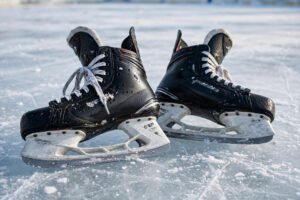
Ice hockey skates are the link between you and the ice. They affect almost everything else you do in the game. Good ice hockey skates help you stop, turn, push off and stay balanced. A poor fit can make even simple skating feel hard work.
This guide explains ice hockey skates in plain terms. It covers fit, stiffness, blades and sharpening in general terms, and everyday care. It is for beginners and more experienced players. Shops and search results use several overlapping terms for the same thing. This guide covers them in one place: hockey skates in general, ice skates for ice hockey as a product description, and even the search phrase ice skates ice hockey. That phrase usually points to the same kind of boot and blade.
How to choose ice hockey skates
Start with how you will actually use them. If you are learning to skate and play, comfort, ankle support and a forgiving feel matter more than a very stiff, high-performance boot. If you already skate well and play regularly, you may want a firmer boot and a sharper, more responsive feel. That is only if your feet and ankles are ready for it.
Do not choose skates on looks alone. Colour, style and a smart finish are pleasant. They will not help you if the boot pinches, slips or leaves your ankle unsupported. A well-fitting, plain pair of ice hockey skates will always serve you better than a striking pair that hurts after a short time on the ice.
Ice hockey skates fit first: length, width and ankle support
Fit is the single most important part of choosing ice hockey skates. It is worth taking time over.
Length and width
Your skates should feel snug without squeezing. Your toes should touch the front of the boot lightly when you stand. They should not feel crushed when you bend your knees into a skating position. If your toes curl, the boot is too short. If your foot slides forward and back inside the boot, it is too long or too wide. No amount of tight lacing will fully fix that.
Width matters just as much as length. A narrow foot in a wide boot will move around and lose support. A wide foot in a narrow boot will ache, especially around the sides and the forefoot. Try both feet, not just one. Most people have slightly different feet. Wear the socks you plan to skate in. Lace the boots fully before you judge the fit.
Ankle support and trying them on
Good ankle support does not mean a boot so stiff that you cannot bend your ankle at all. It means the boot holds your ankle upright and steady. It still lets you flex forward when you push off. When you try skates on, stand, bend your knees and shift your weight from side to side. Your heel should stay seated. Your ankle should feel supported. You should not feel sharp pressure on the ankle bones.
Walk around in the boots if the shop allows it. Pay attention to any spot that pinches straight away.
Ice hockey skates stiffness in general terms
Stiffness describes how firm the boot feels. It is best understood in general terms rather than as a precise rating. A softer boot bends more easily and feels more forgiving. That suits many beginners and casual players. A stiffer boot holds its shape more firmly and gives more support at speed. That suits stronger, more experienced skaters who put more force through the boot.
The trade-off is simple. Too soft a boot for a powerful skater can feel wobbly and unsupportive. Too stiff a boot for a beginner can feel unforgiving. It can make learning to balance harder, not easier. Choose stiffness for the skater you are now, not for the skater you hope to become in a year. As your strength, balance and skating improve, your ideal stiffness may change. That is normal.
Children and lighter players also need care here. A very stiff boot designed for a heavier adult may feel like a rigid shell to a lighter player. It can hold back their progress.
Ice hockey skates blades and sharpening in general terms
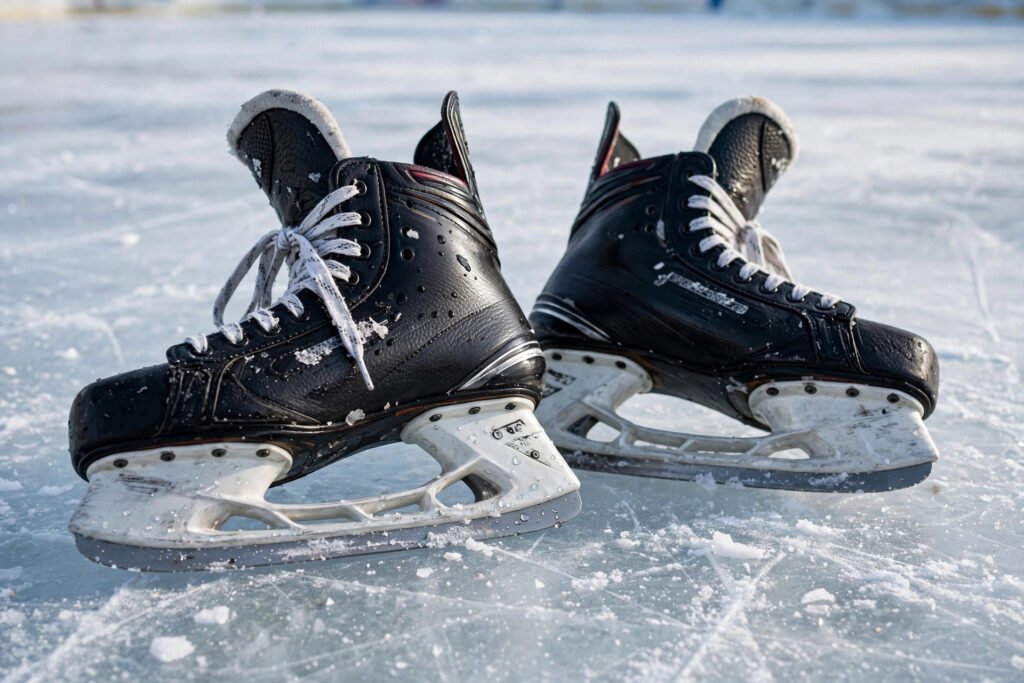
The blade is the part that meets the ice. Sharpening keeps it working as it should. In general terms, a sharpened blade has a hollow ground into its underside. That gives you edges to grip the ice and push against. When those edges dull, the skate feels slippery. Stops feel less secure, and turning takes more effort.
How often a blade needs sharpening depends on how much you skate, the ice you skate on, and how the blade feels. A player who skates several times a week will usually need sharpening more often than someone who skates occasionally. The feel of the blade is the best guide. If stops feel vague, if you slide when you expect grip, or if the edges feel rounded, it is probably time for a sharpening.
Sharpening is a job for a proper skate service, not something to improvise at home. A service can check the blade for damage, nicks and uneven wear. It can sharpen both edges evenly. After sharpening, take a short, careful skate first. Get used to the renewed grip before you play at full intensity. Freshly sharpened blades can feel surprisingly sharp.
Between sharpenings, simple habits help. Dry the blades after every skate. Keep blade guards on when you walk off the ice. Store the skates where the blades cannot knock against hard objects.
Beginners versus experienced players
Beginners and experienced players need different things from their ice hockey skates, even though the basic parts are the same.
For beginners, the priorities are balance, comfort and confidence. A comfortable, supportive boot with a forgiving feel helps you learn to stop, turn and push off without fighting your skates. It also helps to understand the game around you. The guide How Many Periods in Hockey? Complete Game Structure, Guide is a useful companion read for learning how a match is structured. That way, you can focus on skating rather than guessing at the format.
For more experienced players, the priorities shift towards responsiveness, support at speed and consistency. A firmer boot, a blade that holds its edge well, and a fit that stays stable during sharp turns and sudden stops matter more. Experienced players also tend to notice small changes in sharpening and fit more quickly. They rely on those details in fast play. Watching the sport at its highest level can help here too. The 2026 Winter Olympics Ice Hockey Complete Guide gives a sense of how elite players use their skates in full-speed games. For the international game, the International Ice Hockey Federation (IIHF) is also a useful authoritative reference.
Whatever your level, do not borrow another player’s sense of what is right, as feet, weight, strength and skating style all differ.
Everyday care for ice hockey skates
Everyday care for ice hockey skates is simple. It makes a real difference to how long they last and how they feel.
After each skate, take the skates out of your bag. Wipe the boots dry and dry the blades carefully. Leaving wet skates closed in a bag encourages damp, smell and rust. It does nothing for the lining. Let them dry at room temperature, away from direct heat such as a radiator. Direct heat can dry out and stiffen the boot material.
Check the laces, eyelets and blade holders from time to time. Replace worn laces before they snap on the ice. Have any loose or damaged holder looked at promptly. Keep the boots clean with a soft cloth. Store them upright, with blade guards on, so the blades stay protected between sessions.
After a break, take a gentle first skate to check fit, edges and balance before playing hard.
Common mistakes to avoid
One common mistake is choosing skates a size too large, hoping they will last longer or feel more comfortable. Oversized skates usually feel loose, reduce control and can cause blisters, because the foot moves inside the boot.
Another mistake is lacing too tightly at the top and too loosely at the foot, or the other way round. Lace evenly, from the toe upwards. Adjust until the foot feels held without cutting off circulation. If your feet go numb, the laces are too tight.
A third mistake is ignoring the blades. Players often blame their balance or their boots when the real problem is a dull or damaged blade. If your skating suddenly feels slippery, check the blades before you change anything else.
FAQs
How should ice hockey skates fit?
Ice hockey skates should feel snug, with your toes touching the front lightly when you stand and not crushed when you bend your knees. Your heel should stay seated, your ankle should feel supported, and your foot should not slide forward and back inside the boot.
Are stiffer ice hockey skates better?
Not necessarily. Stiffer boots give more support at speed, but they can feel unforgiving for beginners and lighter players. Softer boots are more forgiving and often better for learning. Choose stiffness for your current strength and skating level.
How often should I sharpen my skates?
It depends on how often you skate and how the blades feel. If stops feel vague, if you slide when you expect grip, or if the edges feel rounded, it is probably time for a sharpening. A proper skate service can check the blade and sharpen both edges evenly.
Can beginners use the same skates as experienced players?
They can use the same type of skate, but beginners usually benefit from a more comfortable, forgiving boot, while experienced players may prefer a firmer boot and a more responsive blade. Fit and comfort matter at every level.
How do I look after ice hockey skates day to day?
Dry the boots and blades after every skate, let them dry at room temperature, keep blade guards on off the ice, check laces and blade holders regularly, and store the skates upright where the blades cannot knock against hard objects.
Ice hockey skates: a simple way to decide
Ice hockey skates earn their place when they fit well, support your ankles, hold a good edge and feel comfortable for a full session. Start with fit, choose stiffness for the player you are now, keep the blades sharp and dry, and let your skates improve with you as your skating improves.