Padel Balls: A UK Guide to Types, Sizes and Choosing One
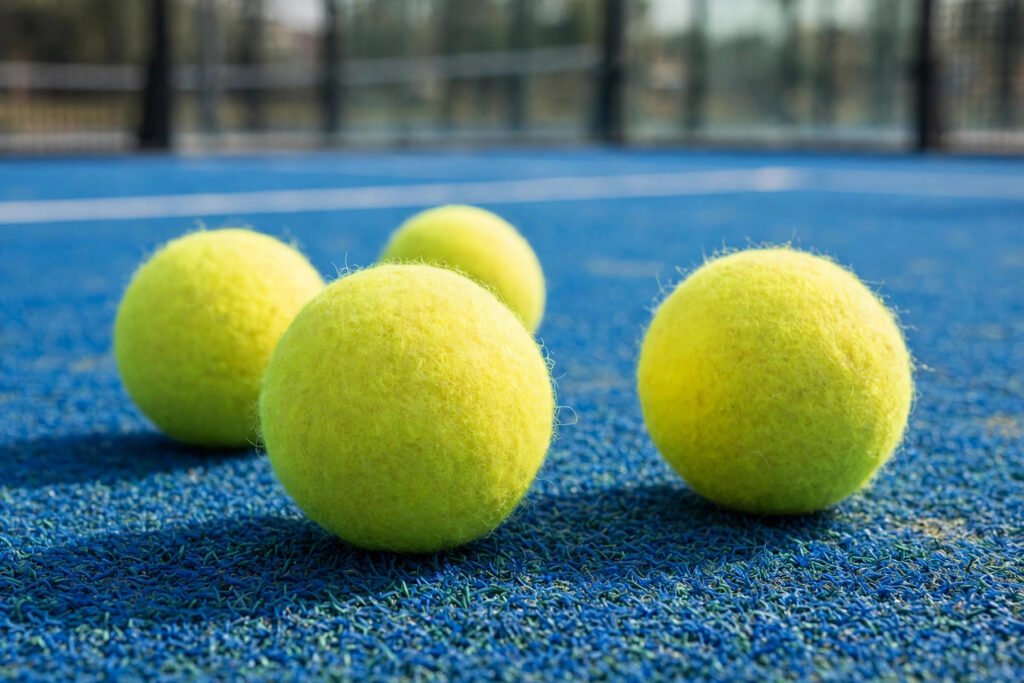
Padel balls look like tennis balls, yet they play very differently. A padel ball carries lower internal pressure and a slightly smaller size, so it bounces lower and slower than a tennis ball. As a result, that slower bounce suits the enclosed padel court, where the ball also rebounds off glass walls. This guide explains padel balls in plain terms. It covers the official size and weight, the main types, and how to choose the right ball for your level. It also covers how long balls last and how to look after them.
What padel balls are
Similarly, a padel ball has a rubber core with a felt cover, just like a tennis ball. The International Padel Federation (FIP) sets the official rules for the ball, and every ball for a sanctioned match must meet them. The rules cover size, weight, pressure, bounce and colour.
FIP rules state that a padel ball must measure between 6.35 and 6.77 cm across. It must weigh between 56 and 59.4 grams. In addition, its internal pressure must sit between 4.6 and 5.2 kg per square centimetre, which works out at around 10 to 11 PSI. For comparison, a tennis ball carries around 14 PSI inside. One detailed guide sets out the official size, weight and pressure rules in full.
The FIP also tests the bounce. The test drops a ball from 2.54 metres onto a hard surface, and the ball must bounce between 135 and 145 cm. At high altitude, however, the rules allow a lower bounce, between 121.92 and 135 cm. Official balls come in yellow or white only, and manufacturers print a mark on the packaging when a ball meets FIP rules.
Overall, the lower pressure gives padel its slower pace. A padel ball leaves the racket more slowly and drops sooner than a tennis ball. That suits a 20-metre court with glass walls, where rallies stay longer and players use the walls as part of the game.
Padel balls vs tennis balls
At first glance the two balls look the same. Both have a rubber core and a felt cover. In addition, both weigh about the same — 56 to 59.4 grams. The difference lies in the pressure and the size. A tennis ball measures 6.54 to 6.86 cm across and carries around 14 PSI inside. A padel ball measures 6.35 to 6.77 cm and carries only 10 to 11 PSI. That small gap of 3 to 4 PSI changes the game.
By contrast, a tennis ball bounces higher and faster off the court and the glass. On a padel court that extra speed makes rallies chaotic, and smashes become hard to defend. A padel ball also has thicker felt, which slows it further and helps it survive hard hits against the walls. In short, a tennis ball plays too fast for padel, while a padel ball would not bounce enough for tennis.
Our padel rules guide explains the full rules of the game, including the serve and how the glass walls work. Those same FIP regulations also cover the ball, so the two guides fit together well.
The main types of padel balls
First, balls for padel fall into a few clear types. Your level and how often you play decide which type suits you best.
Pressurised balls
Pressurised balls are the standard ball for matches and competitive play. In fact, manufacturers fill each ball with compressed air and seal it in a pressurised can. The seal keeps the pressure inside until you open the can. Once you break the seal, the ball starts to lose pressure slowly, even if you never hit it. For that reason, players open a fresh can for every match. Official tournaments only allow FIP-approved pressurised balls.
Pressureless balls
Pressureless balls carry no compressed air inside. Instead, they rely on a thicker rubber core and a dense felt cover for their bounce. In general, they feel a little heavier and bounce a little lower than pressurised balls. They also last much longer, since they lose no pressure over time. That makes them a smart choice for training sessions, practice drills and casual games. They do not suit official matches, since the FIP rules require pressurised balls.
Beginner balls
In addition, beginner balls have an even lower bounce than standard balls. Manufacturers make them for new players who need more time to reach the ball. A slower ball gives beginners longer rallies and more confidence. Once you can rally with control, move on to a standard pressurised ball.
Advanced and pro balls
Finally, advanced balls suit experienced players who want a livelier, faster ball. They carry the full FIP pressure and a high-quality felt that survives hard smashes. Pro balls often come from the same ranges that tournaments use. They suit matches better than practice, since any pressurised ball loses pressure after you open the can.
How to choose padel balls
First, start with your level. Beginners should pick a slower ball or a pressureless training ball. It gives you time to learn the shots and the walls. Intermediate players can move to a standard pressurised ball. Advanced players should pick an FIP-approved match ball.
Next, think about where you play. Indoor courts keep balls in good shape for longer, since the temperature stays steady. Outdoor courts in summer heat wear balls out faster. On a hot day, a fresh can makes a bigger difference than on a cool evening.
Then think about how many you need. A can holds three balls, and a match needs one can. A training session needs more, since balls go out of play and wear out. Buy a few cans at a time, and keep the spares sealed until you need them.
Finally, check the packaging before you buy. Look for the FIP approval mark if you play in a league or a tournament. Check the date on the can too, since old stock can lose pressure on the shelf.
How long padel balls last
In short, a pressurised ball lasts one match at its best. After a match, the pressure drops and the felt wears down. Most players use a fresh can for every match and keep the old balls for practice. A pressureless ball lasts far longer — often several weeks of regular training.
Watch for the signs. A ball that feels soft when you squeeze it has lost its pressure. Flat, worn felt means the ball has lost its grip and its spin. Low, dead bounces on the court mean the ball has had its day. If you can press the ball flat between your fingers, replace it.
You can also run a quick bounce test. Drop the ball from shoulder height onto a hard surface. A fresh ball bounces back up to about waist height. A dead ball drops short and stays low. Trust the test — it tells you more than the look of the felt.
Care and storage
Overall, these balls need little care, but a few habits keep them lively for longer. Keep unopened cans in a cool, dry place, away from direct heat and sunlight. Heat speeds up pressure loss, so a hot car boot ruins balls fast. Cold does not harm them, but let cold balls warm up before you play.
Once you open a can, use the balls soon. If you want to keep a used ball for another session, store it in a pressurised ball saver. A ball saver holds the balls under pressure and slows the loss between games. It will not bring a dead ball back to life, but it stretches the life of a ball you used once.
Also, keep balls away from damp. Wet felt picks up dirt and wears out faster. After a rainy outdoor game, dry the balls before you put them away.
Common mistakes to avoid
First, one common mistake is to play padel with tennis balls. A tennis ball bounces too high and too fast for a padel court, and it makes the game hard to control. Second, reusing the same can for several matches is a mistake. A ball loses pressure after its first match, and the game slows down.
Third, storing balls in a hot car is a mistake. Heat kills the pressure and wears out the felt. Fourth, buying the cheapest balls without checking the FIP mark is a mistake if you play in a league. A league may only accept approved balls.
FAQs about padel balls
Can I use tennis balls for padel?
No. For example, a tennis ball carries around 14 PSI inside, while a padel ball carries only 10 to 11 PSI. That extra pressure makes a tennis ball bounce too high and too fast on a padel court. The ball also rebounds off the glass walls too hard. Use a proper padel ball every time.
How long do padel balls last?
Overall, a pressurised padel ball plays at its best for one match. After that, it loses pressure and the felt wears down. Most players open a fresh can for every match and keep the old balls for practice. A pressureless ball lasts much longer and suits training.
What is the difference between pressurised and pressureless padel balls?
First, pressurised balls carry compressed air inside and come sealed in a can. They give the full, lively bounce that matches require. Pressureless balls carry no compressed air and rely on a thick rubber core instead. They bounce a little lower and last much longer, which makes them ideal for training.
Are padel balls smaller than tennis balls?
Yes, slightly. A padel ball measures 6.35 to 6.77 cm across, while a tennis ball measures 6.54 to 6.86 cm. Both weigh about the same, between 56 and 59.4 grams. The main difference is the pressure, not the size.
Do I need FIP-approved padel balls?
For official matches and tournaments, yes. In fact, the rules require FIP-approved balls. For casual games and practice, any good-quality padel ball works. Check the packaging for the FIP mark if you play in a league.