
Hockey Pucks: A UK Guide to Types, Sizes and Care
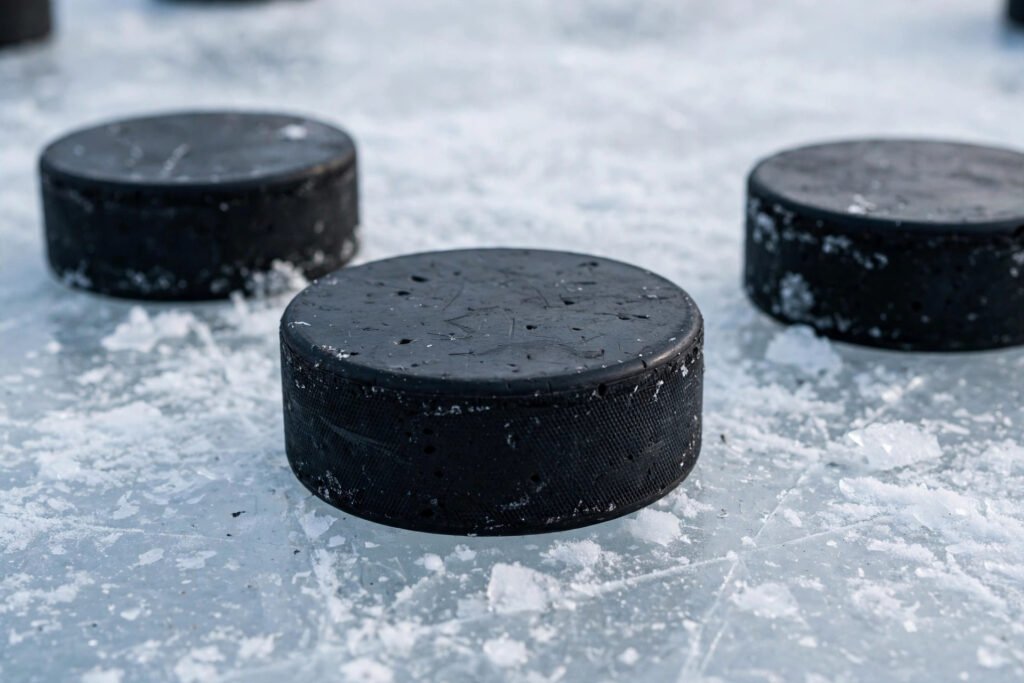
Hockey pucks are easy to recognise. Each puck is a small black disc, and every ice hockey game depends on it. It looks simple, yet the puck you use changes how the game feels.
This guide explains hockey pucks in plain terms. It covers what a puck is, the official size and weight and the main types. It also covers what to check before you buy one, plus care and storage. If you want the wider picture first, our ice hockey stick guide explains the other half of the game. After all, pucks and sticks work together in every session.
What hockey pucks really are
A hockey puck is a solid disc of vulcanised rubber. It measures 3 inches across (76.2 mm) and 1 inch thick (25.4 mm). It weighs between 5.5 and 6 ounces (156 to 170 g). The NHL and the IIHF set these numbers in their official rules, and every game puck must meet them. One reference has the puck’s official specifications set out in full.
The puck is almost always black. The dark colour stands out against the white ice, so players and goalkeepers can follow it. In fact, a puck is small enough to hide behind a stick blade. Yet it is heavy enough to travel fast after a hard strike. That combination is what makes it tricky to track at speed.
Referees freeze game pucks before play. A cold puck bounces less and slides more cleanly on the ice. A warm puck, by contrast, bounces more and behaves less predictably. That is why referees keep a supply of frozen pucks ready during a game.
The main types
Hockey pucks are not all the same. The right one depends on where you play and what you are practising. Start with the surface and the level, not the colour or the brand.
Official game pucks
An official game puck meets the full size and weight rules: 3 inches across, 1 inch thick, 5.5 to 6 ounces, vulcanised rubber. Leagues and international games use this puck. For example, a league match will always use pucks that meet these rules, and leagues allow no other type.
A game puck slides flat and true on ice by design. It also survives hard shots and checks into the boards. A good game puck keeps its shape after repeated use, and its edges stay square.
Street and roller pucks
Street and roller hockey use a different puck. Makers usually mould these pucks from hard plastic, not rubber, and leave them hollow or fit small rollers inside. They slide on asphalt or a sport court, where a rubber puck would grip and stop.
A street puck weighs less than a game puck. It also bounces less on hard ground. However, it is not a substitute for a game puck on ice. Never use it in an official match.
Training pucks
Training pucks come in several weights. A lighter puck suits young players and beginners, since it is easier to handle and less tiring to shoot. A heavier puck, often 10 ounces, builds wrist and shot strength. Use it in short drills, not full games.
Foam pucks are another training option. They are soft, light and safe for indoor practice. For young children and players learning to pass indoors, foam is a safe first choice. They do not behave like a real puck on ice, so they are a training aid, not a match puck.
How pucks are made
A game puck starts as natural rubber. Makers mix the rubber with sulfur and other ingredients, then heat it in a mould. Makers call this process vulcanisation, and it makes the rubber dense, hard and resilient. The finished puck holds its shape under hard impacts and in freezing temperatures.
Next, the mould gives the puck its exact size and its square edges. After moulding, makers trim and check the puck. Official pucks carry a logo or a certification mark, which shows that they meet the league’s rules. A puck without that mark may still suit practice, but leagues will not accept it in an official game.
In general, a small number of specialist makers produce most professional pucks. The process is simple in outline, but the tolerances are tight. A puck that is even slightly off in weight or size will not slide or fly the way players expect.
How to choose hockey pucks
Choosing hockey pucks is simpler than choosing a stick, but a few checks will help. Start with where you play. If you play on ice in a league, you need official game pucks. On the street or a court, you need a street puck. For indoor training, a foam puck may be the right call.
Next, think about your level. Beginners often benefit from a lighter training puck, while experienced players want the true weight of a game puck. Then think about how many you need. A single puck is enough for a casual shoot-around. A training session needs several, since pucks go out of play and players lose track of them.
Finally, check the puck before you use it. Roll it on a flat surface and look for cracks, chips or flat spots. A puck that wobbles or has a damaged edge will not slide true. That holds however good the rest of your kit may be.
What to check before you buy hockey pucks
Before you settle on a set of pucks, run through a short checklist. First, check the weight and size against the official rules, if you play in a league. Second, check the material: vulcanised rubber for ice, hard plastic for street, foam for indoor training.
Third, check the edges. They should be square and clean, with no chips or soft spots. Fourth, check the logo or certification mark on official pucks, since a league may only accept marked pucks.
Fifth, check the condition if you are buying used pucks. Look for cracks and deep scuffs, and ask how the seller stored them. If you leave a puck in the heat, it can warp, and a warped puck will not slide straight.
Care and storage
Pucks need very little care, but a few simple habits will help them last longer. After play, wipe off moisture and let them dry. Store pucks in a cool, dry place, away from direct heat and sunlight. Heat can soften rubber and warp a puck, so a hot car boot is the worst place to leave them.
Freezing is part of good care, not a problem. Keep game pucks in a freezer before a match, so they are cold when play starts. A cold puck bounces less and slides better. In addition, keep a few spare pucks in your kit bag. A lost or damaged puck should not end a session.
Finally, check your pucks from time to time and replace any with cracks, chips or warps. A damaged puck is not only frustrating to play with, it can also behave unpredictably when a player strikes it hard.
Common mistakes to avoid
First, one common mistake is to use a street puck on ice. It is too light and too hard, and it will not slide or bounce like a game puck. Second, playing with a warm puck is a mistake. A puck straight from a warm room bounces far more than a frozen one, and passing becomes harder to judge.
Buying pucks on price alone is another mistake. A cheap puck with the wrong weight or poor build quality will not slide true. It may also chip after a few hard shots. Ignoring storage is a fourth mistake. Pucks left in heat or damp will not last, however well makers built them.
FAQs about hockey pucks
What are hockey pucks made of?
Makers build hockey pucks from vulcanised rubber. They mix the rubber with sulfur and heat it in a mould. This makes it dense, hard and able to survive hard impacts and freezing temperatures.
How much does a hockey puck weigh?
A regulation hockey puck weighs between 5.5 and 6 ounces (156 to 170 g). It is 3 inches (76.2 mm) across and 1 inch (25.4 mm) thick. Lighter and heavier training pucks are available, but leagues do not allow them in official games.
Why are pucks frozen before a game?
Referees freeze pucks so they bounce less and slide more cleanly on the ice. A warm puck bounces more and is harder to control, so referees keep frozen pucks ready during a game.
Are street hockey pucks the same as ice hockey pucks?
No. Makers usually mould street pucks from hard plastic, and they weigh less than ice pucks. They slide on asphalt or a sport court by design. Never use them in an official ice hockey match.
When should I replace hockey pucks?
Replace pucks with cracks, chips or warps, or ones that no longer slide straight. A quick roll test on a flat surface will usually show whether a puck is still in good shape.