Hockey Shin Pads: Types, Fit and Everyday Care
Why hockey shin pads matter
Hockey shin pads rank among the first pieces of protective kit most players buy. That makes sense. In both field hockey and ice hockey, lower legs sit close to sticks, balls and pucks. Other players also move at speed nearby. A well-fitting pair takes the sting out of everyday knocks. It helps you play with confidence. It also lets you focus on the game, not on protecting your legs.
This guide explains hockey shin pads in plain terms. It covers what they do and the difference between pads and guards. It also covers the main types for field and ice hockey, how to get the fit right, and how to look after them.
What hockey shin pads do
The job of a pair of pads is simple. Pads spread the force of an impact across a wider area. That way, a single knock does not land hard on one small part of the shin. Straps, sleeves, or both hold pads in front of the shin bone. Pads then move with you as you run, turn and stop.
Good pads should feel present but not intrusive. You should notice them when you first put them on. Then you should largely forget them once you start moving. Constant slipping, digging behind the knee, or a restricted stride all signal a poor fit. A pad can look protective and still fail that test.
Hockey shin pads and hockey shin guards: the same idea
Players often use two names for the same piece of kit. Hockey shin pads and hockey shin guards generally mean the same thing. Both names describe a protective covering worn over the shin. Some shops and clubs favour one term. Others favour the other term. Some use both terms on the same page.
No strict rule separates a pad from a guard. So do not worry if a product or a coach uses the other word. Shape, coverage and fit matter, not the label. This guide uses both terms for the same item. It uses pads as the main term for consistency.
Types of hockey shin pads
Field hockey shin pads
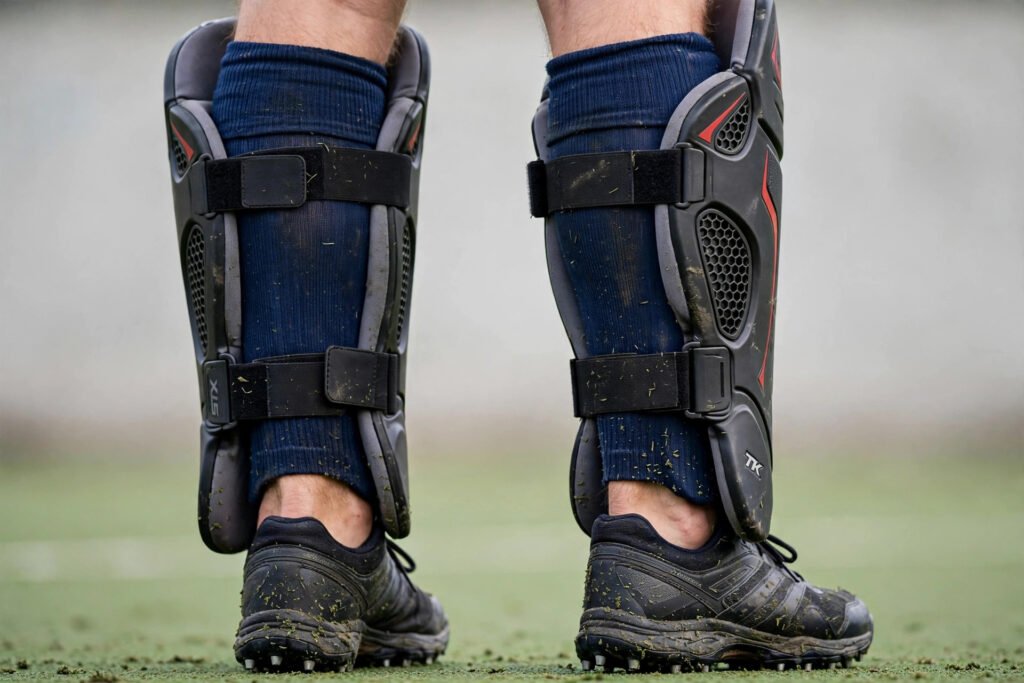
Field hockey shin pads tend to be slim and light. They sit close to the leg and move easily. Players can also run and change direction without a bulky feel. They also fit comfortably under socks. Players play field hockey on a pitch, often in warmer conditions. Breathability and a low profile therefore matter a great deal.
Most field pads cover the front of the shin. Coverage runs from just below the knee to just above the ankle. Some pads add extra padding around the ankle. Others stay deliberately simple.
Ice hockey shin pads
Ice hockey shin pads tend to be bulkier than field pads. The game involves a hard puck, fast skating and more frequent contact. Ice pads often extend further around the leg. They add padding on the sides as well as the front. A more substantial fixing system also keeps them in place during sharp turns and stops.
Ice pads also need to work with skates. The bottom of the pad must sit comfortably above the skate. It must not press down on the skate. It must not leave a gap that exposes the lower shin.
Ankle and calf coverage
Some pads focus mainly on the front of the shin. Others add padding around the ankle bones. A few extend slightly around the calf for extra coverage. Extra coverage can feel reassuring. It can also feel warmer and heavier, especially over a long match.
Choose coverage by how you play. Do not assume that more always means better. For example, a player who rarely takes knocks to the ankle may prefer a simpler pad. That pad stays cool and light. In addition, a defensive player who regularly blocks shots may value extra protection. That player may accept a slightly bulkier feel at first.
How to choose hockey shin pads
Choosing hockey shin pads starts with the game you play. Field and ice hockey place different demands on pads. A pad for one game will not always suit the other game. First, narrow your choice to pads for your game. Then compare fit, coverage and comfort within that group.
Next, think about your position and playing style. For example, defenders and goalkeepers often face more direct shots. They may prefer fuller coverage. Midfielders and forwards cover more ground. They may prefer a lighter pad that moves easily. No single right answer exists here. The best pad suits how you actually play, not how someone else plays.
Comfort matters more than it first appears. A pad can feel fine for a few minutes in a shop. It can feel very different after an hour of play. If you can, try pads on with your normal socks and footwear. Walk and turn in them. Check for pressure points behind the knee and around the ankle. A pad that digs in when you bend your knee will only feel worse during a match.
Finally, check how the pads stay in place. You can adjust straps quickly. Sleeves can feel smoother and less likely to shift. Choose the system you find easiest to put on correctly every time.
Fitting hockey shin pads correctly
Fit is where many players go wrong. It is also the easiest thing to fix. Too long, and a pad will press behind the knee when you bend your leg. Too short, and it will leave part of the shin exposed. A loose pad will slide during play. A tight pad will cut off comfort and movement.
To check fit, put the pads on with your normal socks and footwear. Stand, walk, and bend your knees. If you can, mimic a few playing movements. The pad should cover the front of the shin. It should sit below the knee without pressing into it. It should stay in place when you move. The fixing should feel firm but not tight. You should be able to adjust it without help.
Pay attention to the ankle as well. The bottom of the pad should sit just above the ankle area. It should not press down on your footwear. It should not leave a large exposed gap. If you play ice hockey, check this with your skates on. Skate height changes where the pad naturally sits.
If pads slip during play, check the fixing first. Do not assume that the size is wrong yet. Uneven straps can cause slipping. A sleeve that has lost its stretch can also cause slipping. Both problems can occur even when the pad itself fits well.
For more on how players position themselves and move on the pitch, see the existing guide Positioning Hockey Guide for Beginners. For a general overview of equipment, see Sticks for Hockey Guide 2026. Both give useful background on how pads fit into your overall kit.
The key differences in general terms
Field and ice hockey share the basic idea of shin protection. The details differ, though. Field pads tend to be lighter, slimmer and more flexible. That reflects a game played on foot on a pitch. Ice pads tend to be sturdier, wider and more heavily padded. That reflects a game played on skates with a hard puck.
That difference also affects how pads feel over a full match. Field players often value breathability and freedom of movement. Ice players often value coverage and stability. If you play both games, do not assume that one pair will serve for both.
Caring for hockey shin pads
Hockey shin pads need little care. Regular care also helps them last longer and stay comfortable. After play, take them out of your kit bag. Do not leave them packed away damp. Let them air dry at room temperature. Keep them away from direct heat. Direct heat can damage padding and fixings over time.
Clean them lightly and often. Wipe the outer surface with a damp cloth. That removes mud, ice or pitch debris. Let them dry fully before you store them. Avoid harsh cleaners. Harsh cleaners can damage the surface and the straps. If pads develop a strong smell even after airing, try a gentle clean and a full dry. Persistent smell or damaged padding signals that replacement may be due.
Store pads in a cool, dry place. Do not fold or crush them under heavier kit. Check straps, sleeves and stitching from time to time. Replace pads whose padding has gone flat. Also replace pads whose fixings no longer hold securely.
FAQs
Are hockey shin pads and hockey shin guards the same thing?
In general, yes. Both terms describe the protective covering worn over the shin. No strict rule separates them. In addition, check the coverage, fit and game for the pad. Do not rely on the name alone.
Do I need a different pair for each game?
Yes, in most cases. Field hockey shin pads tend to be lighter and slimmer. Ice hockey shin pads tend to be bulkier and offer wider coverage. Pads also need to fit with different footwear. A pair for one game rarely fits the other game well.
How should hockey shin pads fit?
Good fit covers the front of the shin. The pad sits below the knee without pressing into it. It stays in place when you move. It feels firm but not tight. The bottom sits comfortably above your footwear or skates. It does not leave a large exposed gap.
How long do hockey shin pads last?
That depends on how often you play and how well you care for them. Replace pads that have lost their shape. Also replace pads with flat padding. Replace pads whose fixings no longer hold securely.
How do I clean hockey shin pads?
Let them air dry after play. Wipe the surface with a damp cloth to remove debris. Let them dry fully before storing them. Avoid direct heat and harsh cleaners. Store them in a cool, dry place. Keep them where heavier kit will not crush them.
Hockey shin pads may look like a simple piece of kit. Getting them right still makes a real difference. Choose pads for your game. Check the fit with your normal socks and footwear. Look after them with simple, regular care. With those habits, your pads will protect you well. They will stay comfortable through a full match. They will also last as long as they should.
A final check
Before your next match, check the straps, look over the padding, and make sure the pads still sit where they should. That quick check keeps a good pair working well for longer.