How Many Periods in Hockey? Complete Game Structure, Guide
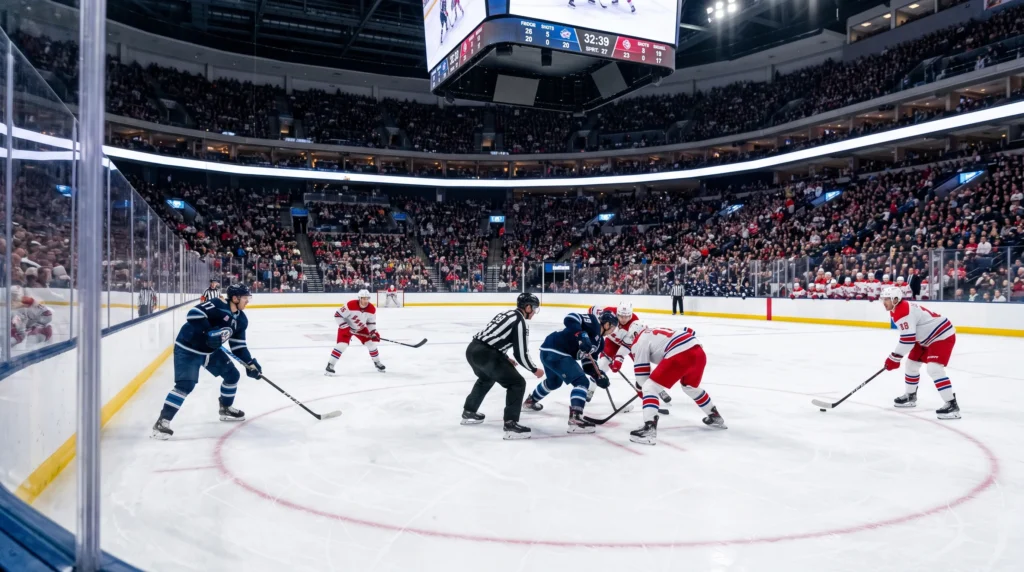
New ice hockey viewers often notice the unique scoreboard layout right away. American football and basketball play in four quarters. Soccer splits into two halves. Ice hockey runs on its own distinct schedule. If you want to know how many periods in hockey teams play, the quick answer is three regulation periods.
An official game features three separate 20-minute periods. These frames total 60 minutes of regulation playing time. Between each frame, teams take an extended break called an intermission. This pause gives athletes a breather. It also lets crews resurface the frozen rink.
Regulation play totals one hour on the official game clock. However, a live broadcast lasts about two and a half hours from puck drop to the final horn.
Below is an in-depth breakdown of how periods work, the real-world duration of an NHL game, and the overtime rules. You will also discover why hockey chose this unique three-frame format.
The Standard Structure: Three 20-Minute Periods
When asking how many periods in hockey occur during a professional match, the rulebook stays uniform. The NHL, the Olympic tournament under IIHF sanctioning, the AHL, and the NCAA all follow the same plan. Every regulation contest uses three 20-minute periods.
The 60 regulation minutes represent pure active gameplay. Ice hockey relies on an official stop-clock system. Officials halt the game clock whenever they blow a whistle for a penalty, offside, icing, or goal. The clock restarts only when the referee drops the puck for a faceoff.
Because the clock freezes during every stoppage, a single 20-minute frame takes 35 to 40 real-world minutes. Games move through three periods and several commercial pauses. Ultimately, fans enjoy a full afternoon or evening of fast-paced competition.
| Game Segment | Official Clock Time | Average Real-World Time |
| First Period | 20 Minutes | 35 to 40 Minutes |
| First Intermission | 0 Minutes (Clock stopped) | 15 to 18 Minutes |
| Second Period | 20 Minutes | 35 to 40 Minutes |
| Second Intermission | 0 Minutes (Clock stopped) | 15 to 18 Minutes |
| Third Period | 20 Minutes | 35 to 40 Minutes |
| Total Regulation | 60 Minutes | Around 2.5 Hours |
Does Hockey Have Quarters or Halves?
Casual sports fans often ask whether hockey ever uses quarters or halves. Viewers accustomed to the NBA or NFL wonder why leagues skip a four-quarter structure.
Hockey never adopted four quarters. The intense physical demands and the fragile ice surface make quarters impractical. Adding extra quarters would create too many long stoppages. That disruption ruins the fast rhythm of skating shifts.
Early clubs once played halves, but that schedule created serious problems. Natural ice sheets could not handle 30 minutes of continuous skate blades cutting the surface.
Understanding how many periods in hockey work best comes down to player safety and rink maintenance. Three periods establish the ideal balance. Athletes skate at maximum intensity, and arena crews keep the surface smooth and safe.
Why Hockey Games Are Played in Three Periods
To understand how many periods in hockey became the worldwide standard, we must examine the early 20th century. During the late 1800s and early 1900s, clubs competed in two 30-minute halves.
Early rinks lacked modern indoor refrigeration and relied on outdoor winter air. Skaters carved deep ruts into the surface, creating heavy piles of snow. By the second half, the ice degraded rapidly. Pucks bounced erratically, and players tripped over snowdrifts. These rough conditions led to frequent injuries.
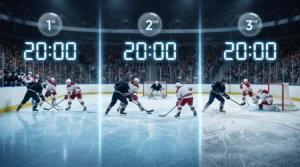
In 1910, the National Hockey Association (NHA) enacted a major rule change. League leaders eliminated the two-half system and introduced three 20-minute periods.
This new schedule gave rink staff an extra intermission. Crews shoveled away excess snow and scraped the sheet smooth. The new setup produced faster, safer, and cleaner play. When the NHL formed in 1917, it kept the three-period rule. That framework remains the gold standard today.
Ice maintenance improved further in 1949 when Frank Zamboni built the first self-propelled resurfacing machine. The Zamboni scrapes off damaged ice, collects slush, and lays down clean hot water that freezes quickly. Modern intermissions provide enough time for the Zamboni to run and let the fresh sheet freeze solid.
How Long Are Hockey Intermissions?
Teams leave the bench for an official intermission between periods one and two, as well as two and three. Knowing how many periods in hockey exist also means understanding these vital recovery breaks.
In the NHL, an intermission lasts 18 minutes for televised broadcasts. This window allows networks to show highlights, interview coaches, and air sponsor messages. Non-televised contests and amateur leagues usually set their intermissions at 15 minutes.
During this break:
-
Players enter the locker room to hydrate, re-tape sticks, and review tactical adjustments with coaches.
-
Arena crews operate two Zamboni machines, finishing their laps in about seven to eight minutes.
-
The fresh layer of hot water cures and freezes into a smooth sheet before play resumes.
Real-Time Duration: Why 60 Minutes Takes 2.5 Hours
A sport with a 60-minute clock still takes over two hours to finish. When sports enthusiasts search how many periods in hockey, they often want to plan their viewing schedules.
Several key factors extend the broadcast runtime:
-
Stop-Clock Rules: Soccer uses a running clock, but hockey pauses on every whistle. A standard NHL game features 50 to 70 faceoffs, and each whistle resets the play.
-
Commercial Timeouts: Televised NHL games feature three 90-second commercial breaks per period. TV networks take these breaks after the 14:00, 10:00, and 6:00 marks during normal stoppages.
-
Penalties and Video Reviews: Referees pause play to assess penalties and send offenders to the penalty box. Coaches can also challenge offside calls or goaltender interference, pausing the game while officials inspect video monitors.
What Happens When a Game Ends in a Tie? Overtime Rules
What occurs when the third period concludes with an equal score? Does the game add another period?
The answer depends on whether teams play a regular-season game or a postseason playoff contest.
Regular Season Overtime
During the regular season, tied games advance to a single sudden-death overtime period. Since 2015, the NHL has used an exciting 3-on-3 skater format lasting five minutes.
Skating with only three skaters per side opens up the rink. This open ice generates endless breakaways and odd-man rushes. If a team scores during these five minutes, the game ends on the spot.
If neither team scores, the game moves to a three-round penalty shootout. Teams alternate penalty shots until one club gains the lead after three rounds. If a tie remains, sudden-death shootout rounds decide the winner.
Stanley Cup Playoff Overtime
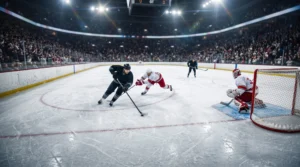
In the Stanley Cup Playoffs, the league changes the rules entirely. Playoff games never use shootouts. Instead, teams play full 20-minute sudden-death periods at 5-on-5 strength until someone scores.
If the first overtime ends without a goal, players take an 18-minute intermission while crews resurface the ice. Then, teams begin a second 20-minute overtime frame. Play continues until a goal settles the outcome. Historic playoff games have reached triple or quadruple overtime, pushing skaters through hours of continuous action.
Period Variations Across Other Leagues and Levels
While answering how many periods in hockey almost always means three, period lengths change across amateur, youth, and recreational tiers.
College and International Hockey
The NCAA and the International Ice Hockey Federation (IIHF) strictly enforce three 20-minute periods. Overtime formats differ slightly across tournaments, but the core 60-minute regulation model remains unchanged.
High School and Youth Hockey
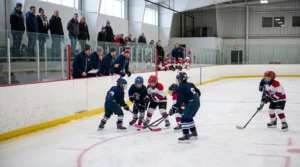
Youth leagues adjust period lengths to fit ice rink rental schedules and young player endurance:
-
Mites (Ages 8 and Under): Young skaters play on cross-ice setups with running clocks or short 10-to-12-minute periods.
-
Squirts and Peewees (Ages 9 to 12): Most organizations play three 12-to-14-minute stop-time periods.
-
Bantams and Midgets (Ages 13 to 18): Players compete across three 15-to-17-minute periods.
-
High School Hockey: Varsity associations mandate three 15-, 16-, or 17-minute periods depending on state guidelines.
Adult Recreational (Beer League) Hockey
Adult recreation leagues rent one-hour ice slots at local arenas. To fit that window, leagues run three 12-to-15-minute running-clock periods. They also use short two-minute bench breaks instead of full resurfacing intermissions.
Ice Hockey vs. Field Hockey: A Quick Comparison
When researching how many periods in hockey, some readers confuse ice hockey with field hockey. Both sports use sticks to shoot past a goalie, but their clock structures differ.
Field hockey does not use a three-period system. Originally, field hockey matches featured two 35-minute halves. In 2014, the International Hockey Federation (FIH) modernized the sport, switching to four 15-minute quarters.
Field hockey features two-minute breaks after quarters one and three, plus a ten-minute halftime rest. If a contest uses four quarters, it is field hockey. If a game features three 20-minute periods, you are watching ice hockey.
The Strategic Importance of the Three-Period Format
Three periods determine how coaches rotate lines and how players budget their stamina. Ice hockey requires immense energy. Skaters reach speeds above 20 miles per hour, deliver hard body checks, and balance on thin blades.
Skaters cannot sprint continuously for long stretches. Instead, athletes skate explosive shifts lasting just 40 to 48 seconds before jumping over the boards for a line change.
The two intermissions serve as vital checkpoints for both clubs:
-
First Period: Teams test the referee’s whistle tolerance, study the opponent’s forecheck, and establish rhythm.
-
Second Period (The Long Change): Teams swap ends of the ice. Each squad’s defensive zone now sits farther from their bench. This long change makes line changes difficult under pressure, leading to more goals.
-
Third Period: Leading teams sit back in defensive traps to protect their zone. Trailing teams push forwards, pinch defensemen, and pull their goalie for an extra attacker.
Understanding how many periods in hockey teams play helps fans appreciate why momentum shifts so dramatically throughout a game.
FAQs
Why does hockey have three periods instead of four quarters?
Hockey adopted three periods in 1910 to preserve the ice sheet. Moving from two 30-minute halves to three 20-minute periods gave crews an extra break to clear snow and smooth the surface. Quarters were avoided because frequent stoppages disrupt player warmups and line-change momentum.
How long does an NHL hockey game last in real time?
An NHL game takes about two hours and 30 minutes from start to finish. Although the game clock counts down only 60 minutes, whistle stoppages, three TV timeouts per period, penalty discussions, and two 18-minute intermissions expand the overall duration.
How many periods are in an NHL game that goes to overtime?
During the regular season, tied games feature one extra 5-minute sudden-death period played 3-on-3. If neither team scores, players settle the game in a shootout. In the Stanley Cup Playoffs, teams play continuous 20-minute periods until someone scores.
What is the longest hockey game ever played?
The longest game in NHL history occurred on March 24, 1936, between the Detroit Red Wings and the Montreal Maroons. The teams stayed tied 0-0 after regulation and played six full overtime periods. Detroit forward Mud Bruneteau finally scored at the 116:30 mark of overtime to end the contest.
Are all hockey intermissions 18 minutes long?
Televised NHL games feature 18-minute intermissions to fit broadcast analysis and advertisements. Non-televised games and college matches usually set intermissions at 15 minutes. Youth and adult leagues bypass resurfacing breaks entirely, using quick two-minute bench rests to conserve rental time.
Final Thoughts
Whenever you visit an arena or tune into a broadcast, remember that how many periods in hockey you watch always starts with three. Those three 20-minute frames deliver 60 minutes of high-speed collision, skill, and strategy. With two intermissions that allow rinks to freeze clean and players to recharge, this structure remains one of the most exciting setups in modern sports.