Pink Padel Racket: A UK Guide to Choosing the Right One
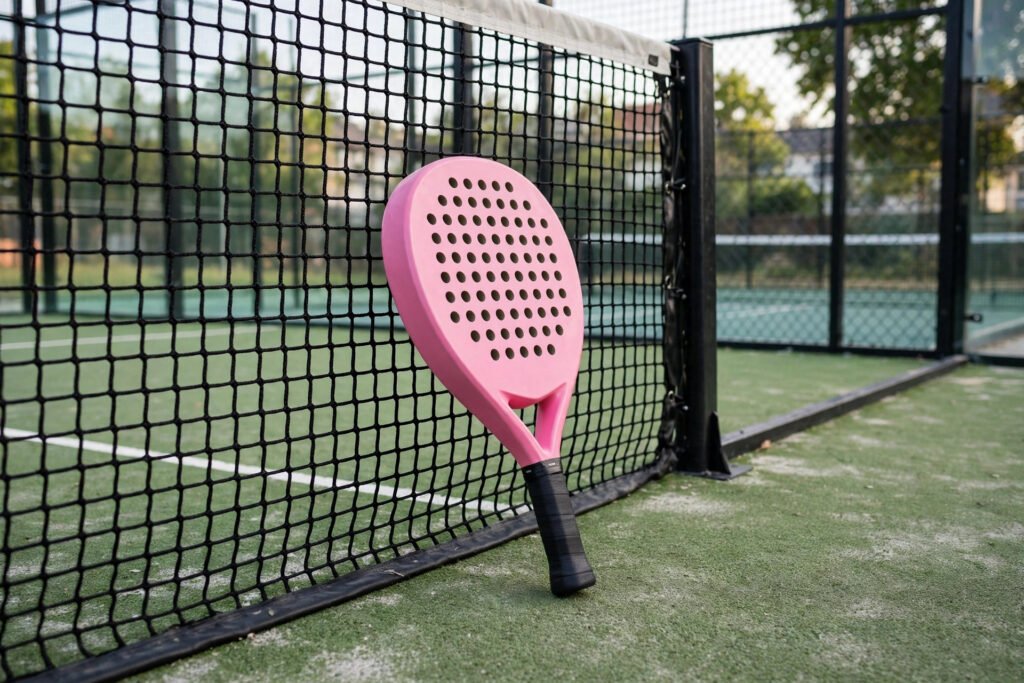
A pink padel racket stands out the moment you step on court. The bright colour catches the eye, and it makes your racket easy to spot. Yet the colour changes nothing about how the racket plays. It follows the same rules, the same size limits and the same materials as any other padel racket. This guide explains what a pink padel racket is and how to pick the right shape, weight and materials. It also covers what to check before you buy and how to look after it.
What a pink padel racket is
First, colour sits on the surface of a padel racket. Makers paint the face pink, or they add pink graphics to the frame. The pink layer changes the look only. It does not change the weight, the balance or the way the ball leaves the face.
In fact, the FIP rules set the same limits for every racket, whatever its colour. A racket measures at most 45.5 cm long, 26 cm wide and 38 mm thick. The handle runs at most 20 cm long. One detailed guide to choosing a padel racket sets out these limits alongside the shapes and materials. In short, pink is a design choice, not a different kind of racket.
For example, some players pick pink for the look alone. Others pick it because it stands out on court and in the club rack. Either way, the colour tells you nothing about quality. A cheap pink racket still plays like a cheap racket. A well-built pink racket still plays like a well-built one. One specific racket review on this site shows how those specs play out on one real racket.
Why players choose pink
First, pink looks good. Padel is a social game, and many players like kit with a bit of personality. A pink frame pairs well with bright shoes and a colourful bag.
Second, pink is easy to spot. Courts, clubs and car boots hold a lot of black rackets. A pink racket stands out in the pile, so you grab the right one every time.
Third, pink makes a good gift. Friends and family often buy one for a player who already loves the game.
Finally, pink suits players who want to stand out. It says nothing about your level. Beginners, club players and advanced players all use pink rackets. The colour is a choice, not a skill label.
The three shapes
Shape decides where the sweet spot sits and how the racket feels in your hand — far more than colour does. Three shapes cover almost every racket in a shop.
Round
A round racket puts the sweet spot low and central, close to your hand. The sweet spot runs large, so off-centre hits still travel where you aimed. Round rackets usually carry a low balance, which makes them quick at the net and easy to control. For example, a beginner will find a round racket forgiving on mishits, and defensive players should start here.
Teardrop
A teardrop racket sits in the middle. The sweet spot sits a little higher than on a round racket, and the balance runs even. You gain power without losing much control. As a result, a teardrop suits improving players and all-rounders.
Diamond
A diamond racket puts the sweet spot high in the head, and the sweet spot runs small. The balance runs head-heavy, which adds power on smashes but makes the racket slower to bring round. In short, a diamond suits experienced attacking players with sound technique. Beginners should leave it alone.
Weight and balance
Padel rackets usually weigh between 340 and 390 g, according to LTA Padel. Lighter rackets move faster at the net and feel kinder on the elbow and shoulder. Heavier rackets feel more stable against hard hitters and put more mass behind the ball. Most players start near 360 g and adjust from there.
Next, balance describes where the weight sits along the racket. A low balance keeps mass in the handle and favours control and quick hands. A high balance pushes mass into the head and favours power. Balance and shape usually move together. Most round frames run low-balanced, and most diamonds run high-balanced.
Check the listed weight range before you buy. The same model can vary by a few grams from one unit to the next. Hold the racket if you can, and swing it a few times before you decide.
Core and face
Inside every padel racket sits a foam core, almost always EVA. A soft core lets the ball sink in, which adds comfort and gives you free depth on slow swings. It suits defenders, newer players and anyone with a sore elbow. A hard core returns more energy, so it rewards fast swings with extra pace and a crisper feel.
In addition, the face sits over the core. Fibreglass flexes more, so it feels softer and more forgiving. It costs less, and it suits new players and juniors. Carbon feels stiffer and returns more of your swing speed. It suits players with consistent contact who want precision.
Some carbon faces carry a K number, such as 3K, 12K or 18K. The number describes the weave of the carbon fibres. A 3K face flexes more and feels comfortable. A 12K face balances touch and power. An 18K face feels firmest and gives the most power.
How to choose a pink padel racket for your level
Match the racket to your level, not to the colour. Pink frames come in every shape and weight, so start with how you play.
Beginners
Start with a round racket, a low balance and a soft core. Pick a weight near 360 g and a fibreglass face. This combination forgives mishits, feels kind on your arm and gives you easy depth. It will serve you well for your first year or two.
Intermediate players
Move to a teardrop shape once your technique feels steady. An even balance and a medium core give you more power without losing control. A carbon face adds precision if your contact feels consistent. Try a few models before you commit.
Advanced players
Pick the shape that matches your style. Attackers often choose a diamond with a high balance and a hard core. Defenders often stay with a round or teardrop shape and a softer core. At this level, the grip, the surface texture and the exact weight matter as much as the shape.
What to check before you buy a pink padel racket
First, check the size against the FIP limits. It must measure no more than 45.5 cm long, 26 cm wide and 38 mm thick.
Second, check the weight on the spec sheet. Look for the listed range, and pick a weight you can swing for a full match. A racket that feels light in the shop can feel heavy after an hour on court.
Third, check the grip. The handle should feel comfortable in your hand, and an overgrip should wrap cleanly around it. A grip that is too thin or too thick will tire your hand.
Fourth, check the surface. A smooth face suits control, while a rough face helps you grip the ball for spin. Run your hand over the face and feel the texture before you decide.
Fifth, look at the frame and the holes. The edges should feel clean, with no cracks or rough spots. The holes should sit evenly across the face, and the frame should feel solid when you tap it.
Care and storage
Overall, a pink padel racket needs little care, but a few habits keep it in good shape for years. After play, wipe the face and frame with a dry cloth to remove sand and dust from the court. Keep the racket in a thermal bag or cover. Store it in a cool, dry place away from direct heat and sunlight. Heat can soften the foam core, so a hot car boot makes a poor storage spot.
Replace the overgrip when it feels smooth or slippery. A fresh overgrip costs little and keeps the racket secure in your hand. Check the frame from time to time for cracks, especially near the holes and the edge. A cracked frame can break without warning, so replace it rather than risk it.
Finally, keep the racket away from hard knocks. Do not tap it against the glass or the net post.
Common mistakes to avoid
First, one common mistake is to choose by colour alone. A pink padel racket looks great, but the shape, weight and core decide how the racket plays. Pick the spec first, then pick the pink version of it.
Second, buying a diamond racket too early is a mistake. The small, high sweet spot punishes mishits, and it can slow your progress. Start round, then move up when your technique is ready.
Third, ignoring the weight is a mistake. A heavy racket feels powerful in the shop, but it can tire your arm after an hour.
Fourth, skipping the grip check is a mistake. A poor grip causes blisters and slips, however good the racket. Finally, leaving the racket in a hot car is a mistake. Heat damages the core and shortens the life of the frame.
FAQs about pink padel rackets
Do pink padel rackets play differently from other colours?
No. The colour sits on the surface and changes nothing about the shape, weight, core or face. A pink padel racket plays exactly like the same model in black or blue. Pick the spec first, then the colour.
What shape suits a beginner?
A round shape suits most beginners. It puts the sweet spot low and central, and it forgives off-centre hits. Pair it with a soft core and a weight near 360 g.
How much should a padel racket weigh?
Most adult rackets weigh between 340 and 390 g. Lighter rackets suit control and quick hands, while heavier rackets suit power.
Does a pink padel racket cost more?
Not as a rule. Makers charge for the shape, materials and build, not for the colour. A pink version usually costs the same as the same model in another colour.
How do I look after a pink padel racket?
Keep it in a thermal bag or cover. Store it in a cool, dry place away from heat and sunlight. Wipe it after play, replace the overgrip when it feels smooth, and check the frame for cracks.