Stability Running Shoes: A UK Guide to Fit, Types and Choosing the Right Pair
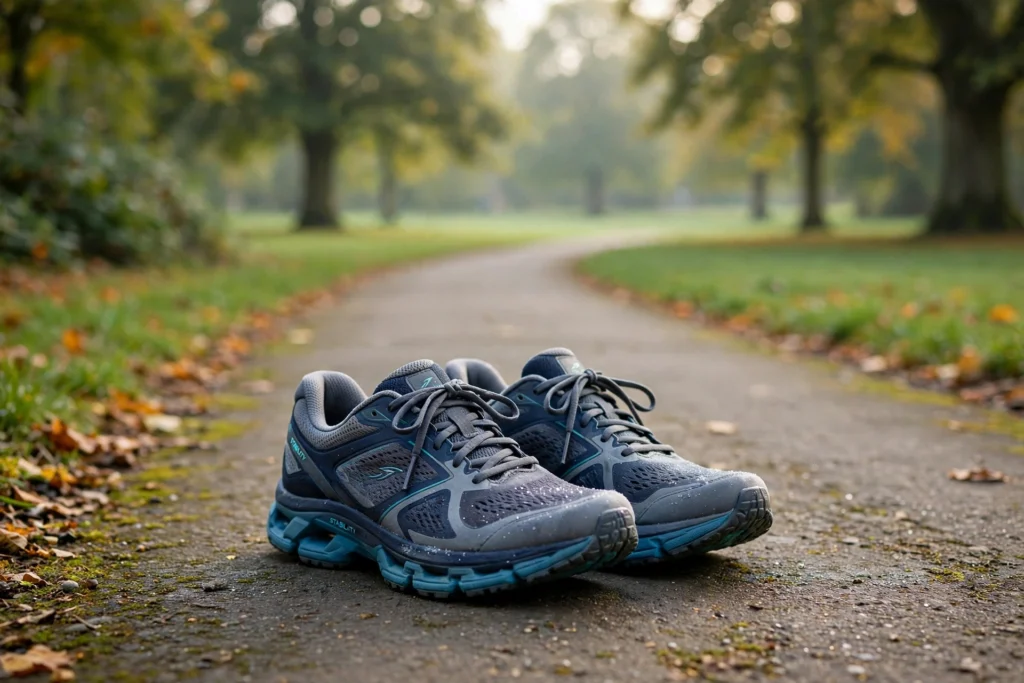
Stability running shoes suit runners whose feet roll inward on landing. For example, they add firm support on the inner side, and this support guides the foot straighter. In addition, this guide covers how they work, how to check your gait, and how to find the right fit.
What Are Stability Running Shoes
Stability running shoes add structure to the inner side of the midsole. For example, firmer foam or a support post sits under the arch and slows the inward roll. In fact, overpronation means the foot rolls inward more than it should after landing. However, too much roll can twist the ankle and load the knee. As a result, these shoes suit runners with this pattern, and they also suit runners with flat feet or low arches. Conversely, motion-control shoes use very stiff support that most runners never need.
Stability Running Shoes vs Neutral Running Shoes
Neutral running shoes suit runners whose feet land in a fairly straight line. In fact, they focus on cushioning, and they let the foot move freely through each stride. In addition, stability running shoes add guidance on top of cushioning.
First, check how your feet behave when you run. For instance, a neutral gait pairs well with neutral running shoes, while a clear inward roll points toward stability support. Secondly, think about your arches. Meanwhile, high arches often pair with neutral shoes, and low arches often pair with stability shoes.
| Need | Best match |
|---|---|
| Straight landing, normal arches | Neutral running shoes |
| Clear inward roll, flat feet | Stability running shoes |
| Guidance plus cushioning | Stability running shoes |
Overall, choose the type that matches your gait.
How to Tell If You Overpronate at Home
You can check your gait at home first. For example, the wet-foot test takes two minutes, and it needs only water and a sheet of paper. First, wet the sole of one foot. Next, step onto the paper and stand still briefly. Then step off and look at the print.
A full footprint with little curve on the inner edge points to a flat foot, and flat feet often overpronate. Conversely, a print with a clear curve points to a high arch. Meanwhile, a print between these extremes points to a normal arch.
Your old trainers tell a second story. For example, heavy wear on the inner edge of the heel and forefoot often signals overpronation. On the other hand, even wear across the sole points to a neutral stride.
What Is Gait Analysis and Do You Need It
Gait analysis studies how your feet move when you run. For example, a specialist shop usually films you running on a treadmill, and the footage shows how each foot lands, rolls and pushes off. In addition, the session checks your arch shape and stride.
For instance, most sessions take around 30 minutes, and some shops offer it free with a purchase. As a result, the cost stays low.
The at-home checks above suit many runners. However, book a session if your gait stays unclear or you keep getting the same injury. Conversely, skip it if both home checks agree and your current shoes feel fine.
How Should Stability Running Shoes Fit
Fit decides whether a good shoe feels good. For example, leave a thumb’s width of space between your longest toe and the front of the shoe. In addition, the heel should feel secure. Meanwhile, the forefoot should feel roomy.
Buy a half size up from your normal shoes. Indeed, feet swell during a run, and a snug fit in the shop can turn into a tight fit after five miles.
Wide feet need a wide fit, not a longer shoe. For instance, look for 2E widths for a wider forefoot, and 4E widths for a very wide fit. Finally, test the fit with the socks you run in, since thick socks change the space inside the shoe.
Road, Trail and Fell Running Shoes Compared
Road shoes suit tarmac and pavements. For example, they use smooth soles for hard ground and pack in cushioning for long miles. In addition, trail shoes suit mud, grass and uneven paths. Moreover, they use lugged soles and a tougher upper to guard against stones.
Fell running shoes are the specialist of the three. In fact, fell running means racing over open hills and moorland, often in wet and rough conditions. Furthermore, fell running shoes use deep lugs that shed mud, sit low on uneven slopes, and grip wet rock.
Overall, match the shoe to the ground you run on most. For instance, road shoes work best on tarmac, and fell running shoes work best on steep, muddy fells.
Buying Running Shoes on Sale in the UK
Sales offer a smart way to buy good shoes for less. For example, previous models drop in price when a new version arrives. In addition, end-of-season sales and January sales also bring real savings.
Look for a sale on running shoes for men in the same places. Indeed, men’s sizes often go on sale when a model changes, so check the model year. However, a discounted shoe still needs the right fit, so never buy a size that pinches just because it costs less.
First, confirm the returns policy, since sale shoes sometimes carry stricter terms. Secondly, check that the model is the current or previous version. Thirdly, try the fit at home, and send the pair back if it rubs.
When to Replace Your Running Shoes
Most everyday shoes last around 400 to 500 miles. For instance, heavier runners and runners on rough ground may wear a pair out sooner. However, mileage gives a guide only, so watch for wear signs too.
Replace a pair when the cushioning feels flat, when the outsole shows smooth patches, or when the upper tears. In addition, soreness after runs can also signal worn shoes. Finally, keep a rough note of the miles on each pair.
How to Clean Running Shoes Without Damaging Them
First, remove the laces and insoles. Next, brush off dried mud with a soft brush. Then wash the uppers with lukewarm water and a little mild soap.
Rinse off the soap and let the shoes air dry at room temperature. Next, stuff them with newspaper to hold their shape. In addition, wash the laces and insoles by hand too.
However, avoid the washing machine and tumble dryer, since heat and spin can warp the shape. Overall, gentle hand cleaning keeps a pair in good shape for far longer.
Breaking In New Shoes and Rotating Two Pairs
New shoes need a few easy runs before they feel right. First, start with short, gentle runs. However, blisters or rubbing in the first run often mean the fit is wrong.
Rotating two pairs helps in two ways. First, each pair gets a day to dry and recover its shape between runs. Secondly, a small change in support works different muscles and can cut the risk of overuse niggles. In addition, rotation spreads the miles, so both pairs last longer in total.
Are Stability Running Shoes Good for Knee Pain
Stability shoes can help some runners with knee pain, yet they never cure it. For example, the support steadies the foot, and a steadier foot can cut the twisting force that reaches the knee. In addition, runners who overpronate often notice a difference after long runs. However, knee pain has many causes, and shoes fix only the ones linked to foot movement.
See a physiotherapist or GP if pain persists, swells, or stops you running. In addition, strength work for hips and thighs often helps knees more.
A Beginner’s First Pair
A first pair should feel comfortable from the first step. For example, start with the at-home checks above, then visit a running shop if you can. Next, try two or three models in the shop. However, comfort beats brand, and a shoe that pinches in the shop will pinch worse at mile three.
Set a budget before you shop. Finally, look for last season’s model on sale.
Sports fans who also play cricket can read our cricket bat size guide for help with a different kit choice.
Frequently Asked Questions
What are stability running shoes? They are trainers with firmer support on the inner side of the midsole. For example, the support slows the inward roll and guides the foot straighter.
How do they work? They use firmer foam, a support post or side rails to steady the foot on landing. However, the foot still moves freely while the inward roll stays under control.
Do I need them if I overpronate? Most overpronators benefit from them. In addition, a gait analysis gives a clearer answer when the home checks stay unclear.
What is the difference between stability and neutral shoes? In fact, stability models add firm support, while neutral models focus on cushioning.
Should I buy a size bigger than my normal shoes? A half size up usually works best, since feet swell during a run. For example, leave a thumb’s width at the toe.
How much should I pay for a good pair? Good everyday models often cost between £120 and £165. In fact, previous versions on sale cost less.
Can I wear them on trails? For example, they suit dry park paths and light trails. In addition, trail or fell shoes give far better grip once the ground turns rough.