Cricket Bat Size Guide: Choosing, Gripping, Sticking and Looking After Your Bat
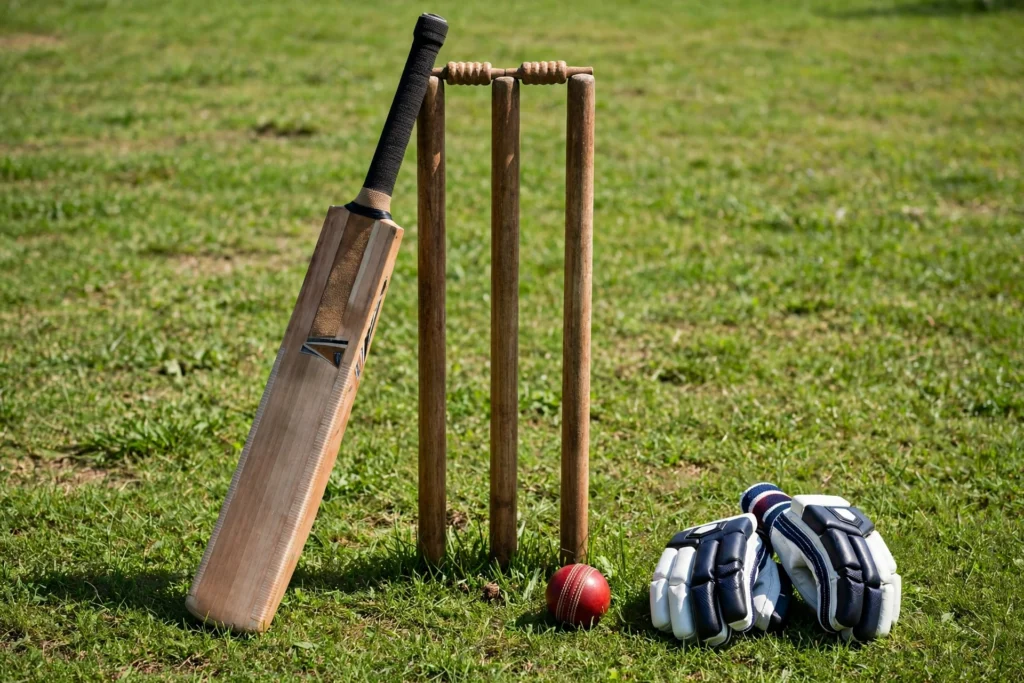
Choose a cricket bat by height, not age. Stand the bat upright beside you. The top of the handle should reach your wrist crease. If it does, the size fits. This cricket bat size guide gives the chart by height and age, plus grips, stickers, gloves and care.
Cricket Bat Size Guide: The Size Chart by Height and Age
Height decides the size. First, measure the player in socks. Next, match the height to the chart.
Sizes 0 to 3: below 137cm, ages 4 to 9. Size 4: 137 to 144cm, ages 9 to 11. Next, size 5: 144 to 150cm, ages 10 to 12. Then size 6: 150 to 157cm, ages 11 to 13. The harrow bat size is 32 and a half inches, for 162 to 168cm. A short handle cricket bat suits players above 168cm. A long handle cricket bat suits tall adults. Finally, a Small Adult sits between Harrow and Short Handle.
Overall, this guide uses height first and age second. Cricket bat sizes run from 0 to 6, then Harrow, Small Adult, Short Handle and Long Handle. If a player sits between two sizes, take the smaller one.
Cricket Bat Size Guide: How to Measure Your Player
Measuring takes two minutes. First, measure the player’s height in socks, back to the wall. Mark the top of the head, then measure to the floor. Next, try the wrist-crease test. Stand the bat upright beside the player. The top of the handle should reach the wrist crease. If it reaches higher, the bat is too long. Then ask the player to hold the bat out straight with one hand. If it droops, it is too heavy. Finally, ask them to play a few shadow shots. Use this cricket bat size guide method as a child grows.
Sizes 0–3: Buying for Very Young Players
Children aged 4 to 8 need a light bat. Their first cricket bat should feel like a toy they can control. First, choose size 0, 1, 2 or 3 by height. Next, pick Kashmir willow for a first bat. A cricket bat for kids needs a short handle and a thin grip. Finally, buy the bat that fits today. Do not buy a size up to grow into. A bat that is too big frustrates players. Meanwhile, our junior golf clubs guide covers sizing for young golfers too.
Cricket Bat Size Guide: When to Move Up a Size
Children grow fast. First, watch the backlift. If the bat drops as the player tires, it may be too heavy. Secondly, watch the toe. If the toe drags on the ground, the bat may be too long. Thirdly, watch the timing. If the player is late on the ball, the bat may be too big. Next, check the wrist-crease test again. If the handle top sits below the wrist, it is time to move up. In addition, check the junior cricket bat size at the start of every season. Finally, move up one size at a time.
How Heavy Should a Cricket Bat Be? Weight and Pickup
Weight matters, but pickup matters more. Pickup is how heavy the bat feels in your hands. A balanced 2lb 10oz bat can feel lighter than a poor 2lb 8oz bat. First, learn the bands. Light adult bats run from 2lb 6oz to 2lb 8oz. Hold the bat in your top hand only: if it feels light, the balance suits you. In fact, cricket bat weight is only a guide. Two bats of the same weight can feel very different. Therefore, always pick the bat up before you buy it.
English Willow or Kashmir Willow: Which Is Better?
English willow is lighter and softer, and it is the standard choice for match cricket. Kashmir willow is denser and harder, costs less and lasts longer. First, match the willow to the level. A club player should choose English willow. A young beginner can start with Kashmir willow. Next, look at the grades. English willow comes in grades 1 to 4. In fact, one retailer rates Kashmir willow at 70 to 80 percent of English willow performance. Therefore, Kashmir willow is good value for a first bat.
Cricket Bat Size Guide: Bat Profile and Sweet Spot Position
The profile is the shape of the blade. A low middle suits front-foot players, a mid middle suits all-round players, and a high middle suits back-foot players. First, know your game. Finally, pick the profile that matches your shots.
How to Fit and Replace a Cricket Bat Grip
Gripping cricket bat handles is a simple job. A worn grip slips, so a fresh grip gives control. First, choose the grip type. Rubber grips are the most common. Octopus grips have raised rings. Next, choose the thickness. A thin grip suits small hands. A thick grip suits large hands. If the grip feels thin, add a second layer.
Then fit the grip. To fit cricket bat grip layers, slide a grip cone over the handle. Push the grip up the handle in one smooth move. Finally, trim any extra length at the top. A cricket bat grip should sit flush with the handle top. In fact, cricket bat grips wear out faster than most players expect. Replace cricket bat grip layers when they feel smooth or torn. Handles come in oval, round and semi-oval shapes.
Cricket Bat Stickers: Applying, Replacing and the Rules
Stickers give a bat its look, but they do not change how it plays. First, know what stickers do. They show the maker’s brand and do not affect performance. Next, apply a sticker cleanly. Peel the backing off slowly. Line the sticker up with the blade edges. Press it down from the centre outwards. This pushes air out and stops bubbles. Then replace a sticker when it peels or tears. Warm the old sticker with a hairdryer. Peel it off gently. Then stick the new one on. In fact, a bat cricket sticker is easy to change at home. Cricket stickers bat designs come in many styles. Finally, check the rules. Most club and school cricket allows stickers. Some competitions limit sticker coverage on the blade.
Cricket Batting Gloves: Sizing and Choosing
Gloves protect the hands and improve grip on the handle. First, size the gloves by hand, not age. Measure across the palm at its widest point. Match that number to the maker’s size chart. Next, check the fit. Fingers should reach the ends of the glove. The glove should feel snug, not tight. Then choose junior or adult gloves. Junior gloves have shorter fingers and narrower palms, while adult gloves suit players aged 15 and over. In addition, look for good finger protection. Split-finger gloves protect the little finger. Finally, try the gloves with the bat. In fact, buy cricket batting gloves in the right size.
Cricket Bat Size Guide: Knocking In, Oiling and Care
A new bat needs preparation. First, check if your bat needs knocking in. If yours is not pre-knocked, plan for 6 to 8 hours. Next, knock the bat in with a mallet. Start gently and work across the whole face. Then oil the bat with raw linseed oil. Rub a thin coat on the face and edges. Let it soak in overnight.
In addition, re-oil once or twice a season, because a dry bat cracks more easily. Fit a toe guard to protect the bat from damp. Finally, store the bat at home, not in a damp kit bag. Take it out of the bag after every game. After rain, dry the bat as soon as you get home. Never leave a wet bat in a closed bag. In fact, to knock in cricket bat faces properly takes patience. Good cricket bat care starts before the first ball.
How Long Does a Bat Last? Surface Cracks vs Structural Cracks
An English willow bat lasts 1 to 3 seasons. First, learn the difference between cracks. Surface cracks are thin lines on the face, and they are normal. Structural cracks run deep, split the wood, and appear on the edges or the toe. A structural crack needs repair or replacement. Next, check the bat often. Look at the face after every game. If a crack grows, stop using the bat. In addition, a dead spot is a warning sign. A dead spot means the willow may be damaged inside. Finally, replace the bat when a structural crack appears. In fact, most bats die from neglect, not from big hits.
Bat Rules, Women and Girls, Left-Handed Bats and Second-Hand Buying
The Laws of Cricket limit a bat to 38 inches long and a blade to four and a quarter inches wide. First, check the size before a match. A bat over the limit cannot be used. Next, consider women and girls. Most makers offer the same sizes for all players, because height and strength decide the size, not gender. A Small Adult or Harrow bat often suits smaller adults. Then, left-handed players need a left-handed bat. In addition, second-hand bats can be good value. Check the face, toe, grip and handle for damage. Tap the face and listen for dead spots. Finally, a used bat is a smart buy for a growing junior.
How Much to Spend and a First-Bat Checklist for Parents
Price follows willow and grade. Entry Kashmir bats start at about £40. Club-grade English willow bats start at about £150. Mid-range bats run from £150 to £300. Grade 1 bats can reach £900 or more. First, set the budget by level. A beginner needs under £150, while a club player should budget £150 to £300. Next, work through this checklist before you buy. Measure height, check the wrist crease and the toe guard. Finally, buy the bat that fits today. In fact, cricket bat price matters less than fit. The right size at £60 beats the wrong size at £300.
Frequently Asked Questions
What size cricket bat do I need? Measure height first, then check the wrist crease.
What size cricket bat for a 10 year old? Size 4 or size 5, based on height.
What is a harrow cricket bat? A Harrow bat suits players 162 to 168cm tall.
How heavy should a cricket bat be? Most adult bats weigh 2lb 9oz to 2lb 11oz.
English willow or Kashmir willow which is better? English willow suits match players. Kashmir willow suits beginners.
How long does a cricket bat last? An English willow bat lasts 1 to 3 seasons.
A Final Word
This cricket bat size guide gives you the chart, method and care routine. Measure first. Buy to fit today.