Positioning Hockey Guide for Beginners
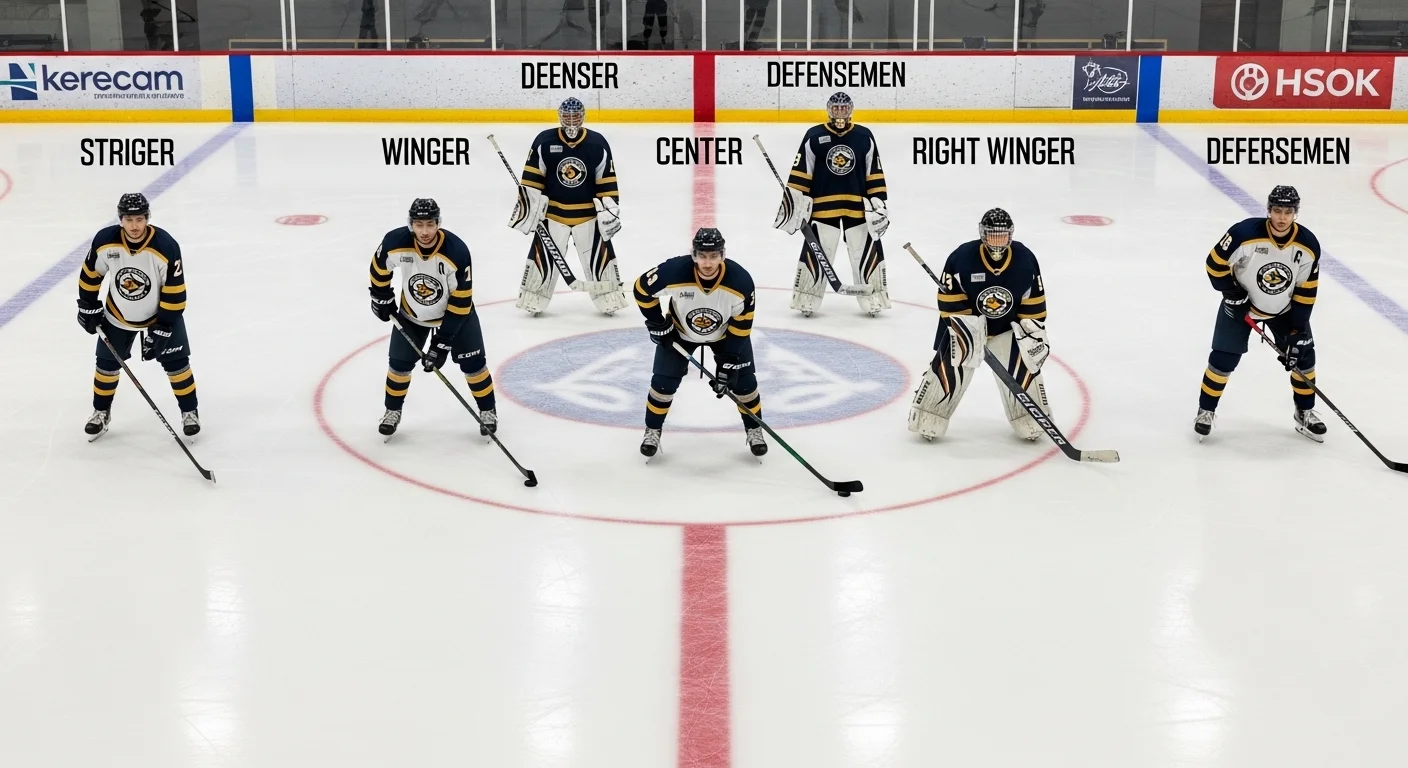
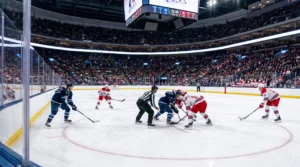
If you are new to hockey, one of the hardest things to understand is where to be on the ice. Many players focus on speed and stick handling, but without proper positioning hockey, even skilled players struggle to make an impact.
This is where positioning hockey becomes essential. It helps players stay organized, support teammates, and make smarter decisions during fast-paced gameplay. In this guide, you will learn how hockey positioning works, why it matters, and how you can improve step by step.
What is Positioning in Hockey
Positioning in hockey refers to where a player should be on the ice at any given moment. It is not just about standing in a fixed spot. Instead, it involves constant movement, awareness, and adapting to the flow of the game.
Many beginners confuse hockey positions with positioning. Positions are roles such as center, winger, defenseman, or goalie. Positioning, on the other hand, is how you move within that role during the game.
For example, a winger does not stay in one place. They adjust their location depending on whether the team is attacking or defending. Understanding this difference is the foundation of good hockey player positioning.
Why Positioning is Critical in Hockey
Strong positioning in hockey can completely change how a team performs. It allows players to cover important areas, support each other, and reduce mistakes.
Here is why positioning matters so much:
- It improves teamwork and communication
- It helps control space on the ice
- It reduces scoring chances for opponents
- It creates better opportunities in attack
Players who understand positioning hockey often look more confident and effective, even if they are not the fastest skaters.
Basic Hockey Positions Explained
Before diving deeper, it is important to understand the main hockey positions and their general roles.
Center
The center plays both offense and defense. They often support teammates, take faceoffs, and move across all zones.
Wingers
Left and right wingers focus on attacking plays. They also help in defensive situations by covering opponents near the boards.
Defensemen
Defensemen stay closer to their goal. Their job is to block attacks, protect the net, and start plays from the back.
Goalie
The goalie protects the goal and is the last line of defense.
Each role has unique responsibilities, but all players must learn proper ice hockey positioning to succeed.
Understanding Ice Zones
One area that many guides overlook is how positioning changes based on different zones of the rink.
Offensive Zone
This is where your team tries to score. Players spread out to create space and passing options.
Defensive Zone
Here, the focus is on protecting the goal. Players stay organized and cover dangerous areas.
Neutral Zone
This is the middle of the rink. Positioning here is important for transitions and controlling the flow of the game.
Understanding these zones helps you know where to move and how to react during different situations.
Offensive Positioning in Hockey
Offensive positioning is about creating scoring chances while maintaining team structure.
Players need to spread out and avoid crowding around the puck. Wingers often stay wide to create space, while the center supports from the middle. Defensemen may move forward to assist but must stay aware of defensive responsibilities.
Some key offensive positioning tips include:
- Stay open for passes
- Create space by moving without the puck
- Support teammates instead of chasing the puck
- Position yourself for rebounds and scoring chances
Good hockey forward positioning can make attacks more effective and unpredictable.
Defensive Positioning in Hockey
Defensive positioning in hockey focuses on protecting the goal and limiting the opponent’s chances. Players should always try to stay between the puck and their own goal. Defensemen guard the area near the net, while forwards help by covering opponents and blocking passing lanes.
Important defensive positioning strategies include:
- Protect the slot area in front of the goal
- Stay close to your assigned player
- Avoid leaving your zone unnecessarily
- Communicate with teammates
Strong defensive positioning in hockey builds a solid team structure and reduces pressure on the goalie.
Positioning Without the Puck
One of the most overlooked skills in hockey is positioning when you do not have the puck. This is where many beginners struggle.
Instead of standing still, players should move into open spaces and prepare for the next play. This includes supporting teammates, creating passing options, and anticipating what will happen next.
To improve positioning without the puck:
- Watch the movement of the game
- Stay ready to receive a pass
- Move into space instead of crowding
- Think ahead and read the play
Mastering this aspect of positioning hockey can greatly improve your overall performance.
Real Game Scenarios
Understanding theory is important, but applying it in real situations is what truly matters.
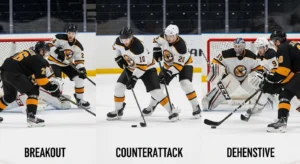
Breakouts
When your team gains possession in the defensive zone, players spread out to move the puck forward.
Counterattacks
Players quickly transition from defense to offense. Positioning becomes dynamic and fast.
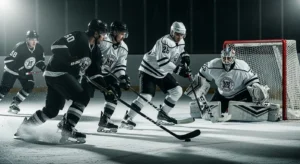
Power Plays
The attacking team spreads out to create passing lanes and scoring opportunities.
Penalty Kills
Defending players stay compact and focus on blocking shots and passes. These scenarios show how positioning changes depending on the situation and game flow.
Common Positioning Mistakes in Hockey
Many players make simple mistakes that affect their performance.
Some common errors include:
- Chasing the puck instead of holding position
- Leaving important areas unguarded
- Standing too close to teammates
- Not paying attention to the game flow
Avoiding these mistakes can quickly improve your hockey positioning skills.
Practical Tips to Improve Positioning
Improving positioning does not happen overnight, but small changes can make a big difference.
Here are some useful tips:
- Watch professional games and observe player movement
- Practice awareness during training sessions
- Communicate clearly with teammates
- Focus on staying in the right place rather than just following the puck
Consistent practice will help you understand positioning hockey more naturally over time.
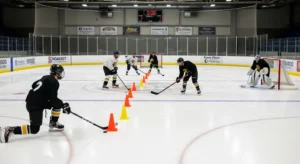
Hockey Positioning Drills
Drills can help players develop better awareness and movement.
Some effective drills include:
- Passing and movement drills to improve spacing
- Small-area games to practice quick decisions
- Defensive coverage drills
- Positioning exercises without the puck
These drills build confidence and improve decision-making during real matches.
Advanced Positioning Concepts
As you gain experience, you can focus on more advanced ideas.
These include:
- Spatial awareness and understanding of open space
- Reading opponent strategies
- Transition positioning between offense and defense
- Adapting to fast changes during gameplay
Advanced positioning helps players stay one step ahead and make smarter decisions.
Conclusion
Positioning is one of the most important hockey skills, yet it is often overlooked by beginners. By understanding where to be on the ice and how to move during different situations, you can improve your performance significantly.
Whether you are learning basic hockey positioning or working on advanced strategies, consistency and awareness are key. Keep practicing, stay focused, and you will see steady improvement in your game.