Hockey Pitch Guide: Size, Markings and Types
Introduction
A hockey pitch is the official playing surface used in field hockey, and it follows strict international standards. Because of this, every field includes precise measurements, structured markings, and carefully designed zones that guide gameplay.
Moreover, this surface is not just a flat area. Instead, it is a highly organized sports environment that supports speed, accuracy, and tactical movement. As a result, players depend on its layout to execute strategies effectively. In this guide, you will clearly understand how the field works, how it is structured, and why each part matters in professional matches.
Official Dimensions and Field Size
To begin with, the standard field size remains the same across international competitions.
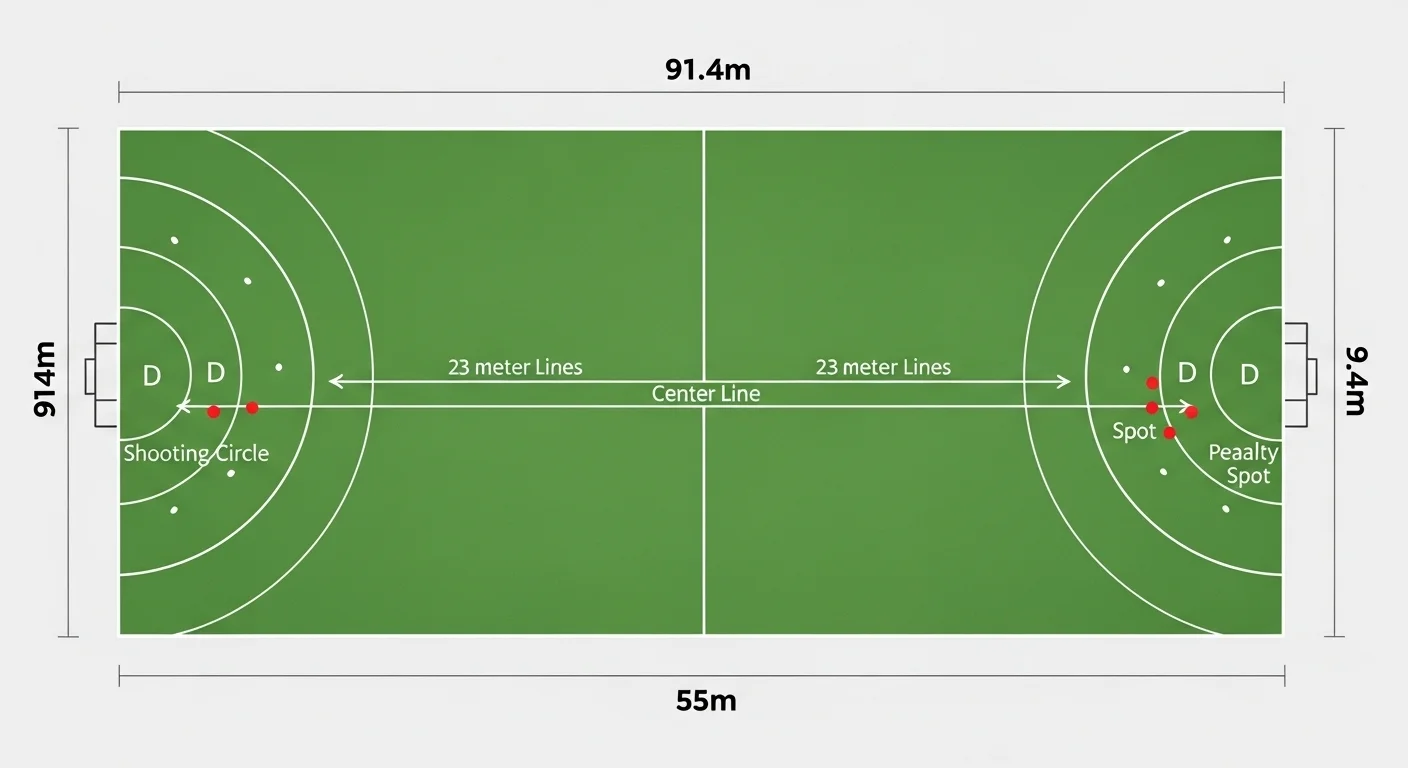
- Length: 91.4 meters
- Width: 55 meters
These measurements define the official hockey field dimensions used globally. In addition, the field is approximately 100 yards long and 60 yards wide.
Furthermore, these dimensions are carefully selected. They allow enough space for fast movement while still keeping the game controlled and structured. Therefore, players can balance both attack and defense efficiently.
Layout and Structure of the Field
The field layout divides the playing area into two equal halves. A center line runs through the middle, and it ensures fairness for both teams. In addition, each half contains multiple zones such as defense, midfield, and attack. Because of this structure, teams can organize their formation and adjust their strategy during the match.
Moreover, this layout improves gameplay flow. Players can quickly switch between attacking and defending positions, which keeps the match dynamic and engaging.
Markings and Lines Explained
Field markings play a crucial role in organizing the game. Without them, players and referees would struggle to maintain structure. For example, the main markings include:
- The center line, which divides both halves
- The 23-meter lines, which define attacking zones
- Side lines and backlines, which mark boundaries
- The penalty spot, which sits 6.4 meters from the goal

Additionally, these markings help referees enforce rules correctly. They also guide players during set plays, free hits, and penalty situations. Therefore, markings directly influence match outcomes.
Striking Circle Area
The striking circle, commonly known as the D, is one of the most important zones on the field. It sits in front of each goal and forms a semicircular area. Importantly, a goal only counts if the ball is played from inside this zone. Because of this rule, attackers focus heavily on entering this space. Meanwhile, defenders work hard to protect it. As a result, most scoring opportunities develop inside the D.
Goal Dimensions and Placement
Goals are placed at the center of each baseline, and they follow fixed international measurements.
- Width: 3.66 meters
- Height: 2.14 meters
These dimensions ensure fairness in all matches. Furthermore, goal nets help confirm when the ball crosses the line. Additionally, referees rely on these standards to make accurate scoring decisions. Therefore, consistency remains a key part of the sport.
Types of Playing Surfaces
Different surfaces influence the speed and style of play. Over time, the sport has evolved significantly in this area.
Natural Grass
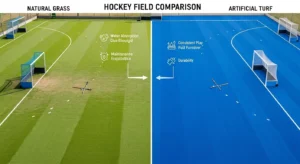
Initially, players used natural grass. However, it created uneven conditions, so the sport gradually shifted away from it.
Artificial Turf
Today, most matches use artificial surfaces because they offer consistency and speed.
Water-Based Turf
Professional matches often use this surface. It gets watered regularly, which reduces friction and increases ball speed.
Sand-Based Turf
In contrast, schools and clubs often use sand-based turf. It costs less and requires simpler maintenance.
Hybrid Surfaces
Additionally, hybrid systems combine natural and artificial materials. Therefore, they improve durability while maintaining performance.
Why Modern Fields Are Blue and Wet
Interestingly, many modern fields now appear blue instead of green. Water plays a key role here. It reduces friction and allows the ball to move smoothly. Moreover, it improves gameplay speed significantly. In addition, the blue color improves visibility for players, referees, and television audiences. Therefore, broadcasts become clearer and more engaging.
Construction and Installation Process
Building a professional field requires multiple structured steps. First, engineers prepare a stable ground base. Next, they install a drainage system to manage water flow. After that, they add shock-absorbing layers for player safety. Finally, they install the synthetic turf.
Because each step depends on the previous one, construction teams must follow a precise order. Otherwise, the field may lose durability or performance quality.
Cost and Investment Factors
The cost of building a professional field varies depending on several factors. For instance, surface type plays a major role. Additionally, material quality and installation complexity also affect the price.
Moreover, location and labor costs influence the final budget. Therefore, planning becomes essential before starting construction. Although professional surfaces cost more, they provide long-term value and better performance.
Maintenance Requirements
Regular maintenance keeps the field in excellent condition. For example, teams must clean debris regularly. In addition, they should brush the surface to maintain an even texture.
Furthermore, drainage systems require inspection to prevent water blockage. Watering may also be necessary for certain surfaces. As a result, proper maintenance extends the lifespan of the field and ensures safe gameplay.
Comparison With Other Sports Fields
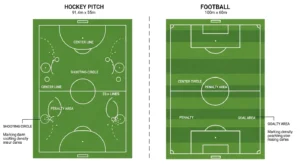
When comparing sports fields, differences become clear. For example, a football field is larger and less structured. In contrast, this field uses more detailed markings for tactical play. Similarly, ice hockey takes place on a much smaller ice surface. Therefore, both sports differ significantly in rules and environment.
Indoor vs Outdoor Fields
Outdoor fields follow international standards and host professional matches. On the other hand, indoor fields are smaller and designed for faster gameplay. Moreover, indoor versions often support training and local competitions. Therefore, both formats serve different purposes in the sport.
Common Design Mistakes
Many construction issues affect field quality. For instance, incorrect measurements can disrupt gameplay. In addition, poor drainage systems may damage the surface. Furthermore, low-quality materials reduce durability. Therefore, builders must avoid these mistakes to ensure a high-quality result.
FAQs
What is a hockey pitch?
It is a structured playing surface used in field hockey with fixed dimensions and markings.
How big is it?
It measures 91.4 meters in length and 55 meters in width.
What is the D area?
It is the semi-circular scoring zone in front of the goal.
What is the best surface?
Water-based artificial turf is the preferred option for professional matches.
Conclusion
In conclusion, a hockey pitch is a highly structured sports field designed for precision and performance. Every part, from dimensions to surface type, plays a role in shaping the game. Therefore, understanding its structure helps players, coaches, and fans appreciate the sport more deeply. Ultimately, the design of the field directly influences how the game is played and enjoyed.